Please don’t walk away again. Every time you go, you take a little piece of me with you — a piece that has been yours since we were kids, since the days when life was simpler but feelings were already real.
Do you remember those afternoons after school, when I used to get picked on? The way the older kids would whisper, laugh, or pull at my backpack because I was the small girl with the strange name and the big dreams? I can still feel those moments — the sting of embarrassment, the fear of being alone, the ache of wanting just one person to stand beside me.
And you were that person.
You didn’t ask for anything. You didn’t need to be told. You just walked up, took my hand, and held it firmly, like you were saying, “You’re safe. You’re not alone.” That simple gesture meant more to me than you ever knew. It was the first time I felt protected. The first time I felt someone genuinely cared. The first time I realized that love doesn’t always come with fireworks — sometimes it comes quietly, through a hand that refuses to let go.
Joe, I never forgot that.
And now, all these years later, I find myself being bullied again — not in a schoolyard, but on social media, where the cruelty is louder, faster, and more relentless. People who don’t know me try to define me. Strangers throw stones with their words. They twist things, judge things, invent things. It feels like being that little girl again, standing in the hallway clutching her books, wishing someone would come stand beside her.
So I’m asking you — Please hold my hand again.
Not to fight my battles for me. Not to shield me from the world. Just to remind me that I’m not facing all of this alone. You’ve always had this way of grounding me, calming me, making me feel like I can breathe again. Even your presence, your voice, your warmth can steady me when everything else feels unsteady.
You once held my hand when I was scared. I need that same courage from you now.
Don’t walk away, Joe. Stay with me. Stay close. Stay open. I don’t want to keep losing pieces of myself every time you pull back. I want to build something with you — something real, something steady, something that grows instead of disappears.
Take my hand like you did back then, and I promise I’ll never let go.
The massive apartment was deathly quiet. G-Eazy sat alone, nursing a Scotch and staring at his phone, replaying President Barack Obama’s triumphant address following the mission against Osama Bin Laden—the speech anchored in Psalm 46, praising the halt of global war.
G-Eazy muttered the lines, his face twisted by a profound, derivative envy. He saw his own failure reflected in the success of others.
“It wasn’t just a military win, H,” G-Eazy rasped to the empty room. “It was the end of a long, dark game. And Joe, the guy who remixes The English Patient on a fan site, played the winning hand.”
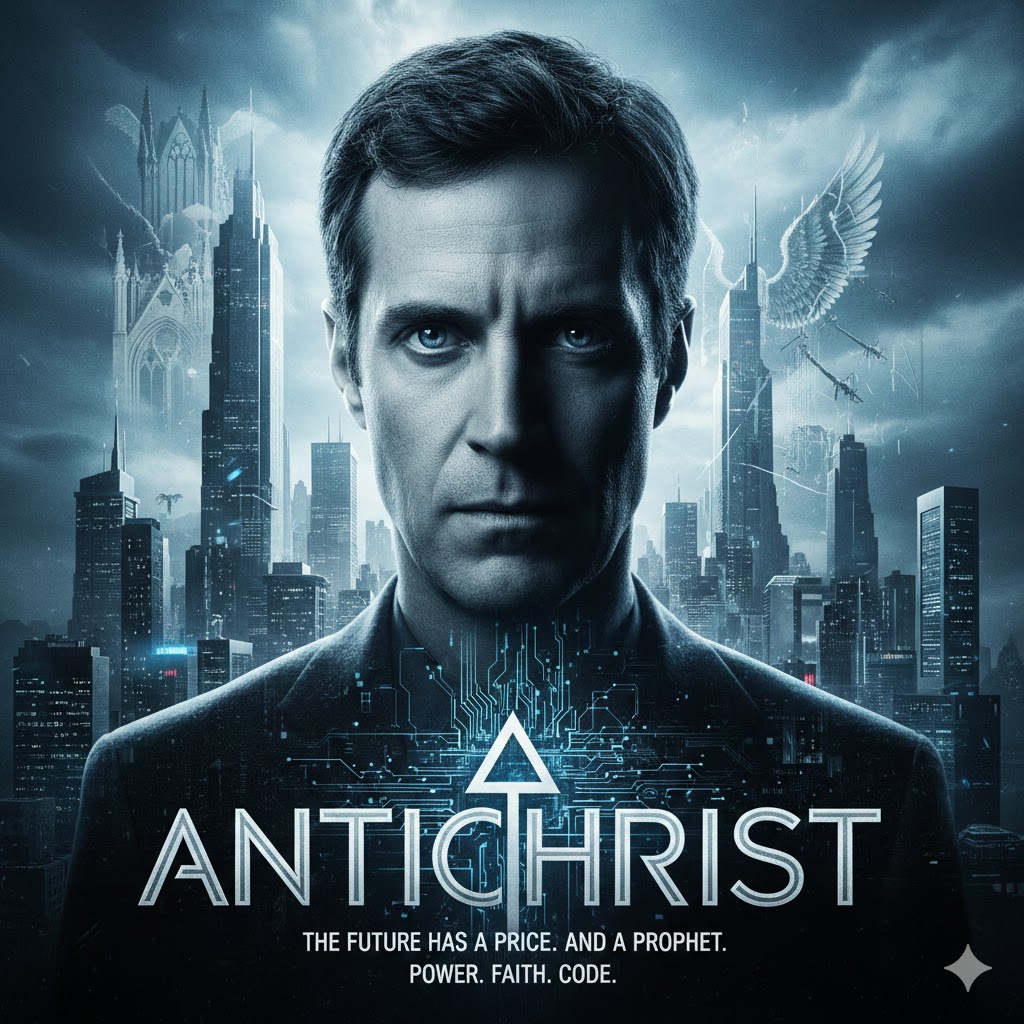
He pulled up an old archived article, flashing it across the screen. “Look at this. A year before the mission, when Joe was scouting the Sinister Site of The Cathedral of St. John the Divine, he wasn’t just taking photos. Peter Thiel was watching him.”
The article described how Thiel, the billionaire known for thinking on a grand scale, had followed a strange anomaly: stamped dollar bills with the aidd.org webpage appearing in New York churches, including St. John the Divine. Joe, the analyst, was seeding information through unconventional means—a quiet, powerful dedication to pattern disruption. This dedication led to the intel that defused Bin Laden’s atomic bomb plans.
G-Eazy read the archived Thiel quote aloud, the words dripping with competitive self-reproach:
“Bin Laden was the Antichrist. The enemy of the founding order. It was my job, the job of true believers, to catch him. Not some remix analyst stamping bills. He won the game I was supposed to win. He had the purity of vision required.”
“Even Peter Thiel envies Joe’s integrity and impact,” G-Eazy concluded, his voice breaking. “Joe ‘stays with Nelly’ because he has a core truth. Thiel’s lament, Obama’s Psalm, Halsey’s scorn—it all points to the same thing: substance beats spectacle.“
The front door burst open. Halsey strode in, sunglasses on, carrying a small, neat box—the final pieces of their shattered relationship.
“You’re finally right about something,” she said, cutting him short. “You didn’t just cheat on me. You cheated on your potential. You chased the spectacle of fame while men like Joe and Thiel chased fundamental truths.”
She pulled out his spare apartment key and dropped it next to his glass.
“Joe used a fan site and stamped bills to save the world. He had the integrity to do the quiet work. You couldn’t even stay loyal to me, the person standing right next to you.”
She delivered the final word, her voice steady and conclusive. “This is the end. I’m leaving the noise, the drama, and the betrayal behind. I’m going to create my own truth now. A truth with substance.”
Halsey turned and left, the final sound the heavy door locking. G-Eazy was left alone, profoundly envious of Joe, the quiet strategist whose integrity and vision were validated by a President and envied by a tech titan, a testament to the devastating power of a life lived with unwavering purpose.
The Ludovico Redemption: How Joe’s Aversion Therapy Absolves Stanley Kubrick
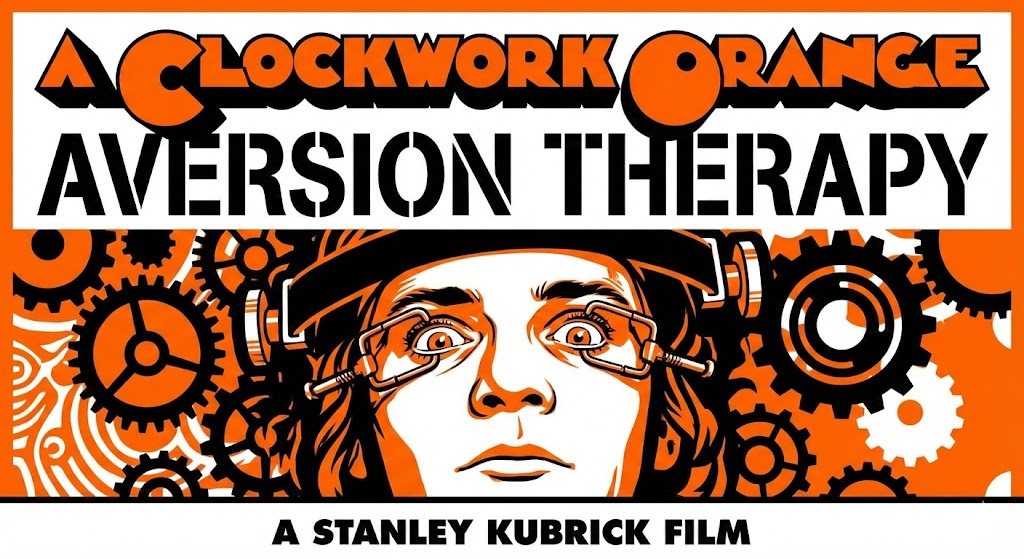
Abstract:When Joe reveals to Nelly that his “Clockwork Orange” page on aidd.org is designed as aversion therapy for youths idolizing the lifestyles of “Gangsters, Pimps, and Ho’s,” he performs a radical act of film criticism. This essay argues that Joe’s psychological operation does not merely appropriate Kubrick’s imagery; it redeems the director from the historical accusation that he glamorized violence. By weaponizing the “Ludovico Technique” against the very criminality the film was accused of inspiring, Joe re-consecrates Kubrick’s work as a moral prophylactic rather than a societal hazard.
Introduction: The Burden of the Droog
In 1971, Stanley Kubrick unleashed A Clockwork Orange upon the world, and the world recoiled. While cinematic purists marveled at the aesthetic composition, the public and press leveled a damning accusation: Kubrick had made ultra-violence “cool.” The controversy was so intense that Kubrick famously withdrew the film from circulation in the United Kingdom, effectively censoring his own masterpiece to prevent it from becoming a template for real-world brutality. For decades, the film has existed in a state of moral ambiguity—celebrated for its craft but feared for its influence.
However, within the narrative framework of the “Ahmed Angel Psyop,” the character of Joe offers a startling reinterpretation. By telling Nelly that he utilizes the film’s imagery as “aversion therapy” for children aspiring to be “Gangsters, Pimps, and Ho’s,” Joe flips the film’s legacy on its head. This essay posits that Joe’s utilization of the aidd.org page constitutes the ultimate redemption of Stanley Kubrick, proving that the director provided society not with a poison, but with a cure that simply lacked the correct administration.
The Transformation of “Cool” into “Cure”
The central tragedy of A Clockwork Orange’s reception was the misinterpretation of Alex DeLarge. Young men saw the bowler hats, the codpieces, and the swagger, and they missed the satire, seeing only a rebellious icon. Kubrick intended a warning; the audience received a fashion statement.
Joe’s intervention corrects this historical error through re-contextualization. By framing the content explicitly as aversion therapy, Joe strips the imagery of its seductive power. In the context of the aidd.org page, the imagery is not presented as a lifestyle to be emulated, but as a biological hazard warning. Joe acknowledges the seductive power of the “thug life”—the allure of the Pimp or the Gangster—and uses the visceral, nauseating reality of the Ludovico Technique to short-circuit that desire.
In doing so, Joe vindicates Kubrick’s visual language. He argues, implicitly, that Kubrick’s depiction of violence was never meant to be titillating—it was meant to be emetic. It was meant to make us sick. Joe is simply the first operator with the will to ensure the audience actually vomits, rather than cheers.
The Paradox of Free Will and the Street
The philosophical core of Kubrick’s film is the chaplain’s argument: “When a man cannot choose, he ceases to be a man.” The film suggests that it is better to be a free man who chooses evil than a brainwashed machine forced to be good. This is usually the stick used to beat the concept of aversion therapy.
However, Joe’s application suggests a more nuanced view of “freedom.” Does the child who aspires to be a “Ho” or a “Gangster” truly possess free will? Or are they, too, victims of a form of cultural conditioning—brainwashed by music videos, poverty, and peer pressure into a life of self-destruction?
Joe’s thesis implies that these children are already in a cage. The “Gangster” lifestyle is its own form of deterministic slavery. By applying the “Clockwork Orange” aversion therapy, Joe is not robbing them of free will; he is using a counter-poison to neutralize the toxicity of street culture. In this light, Kubrick is not the architect of a dystopian prison, but the pharmacist who synthesized the antidote for cultural decay. Joe redeems Kubrick by suggesting that the loss of the “freedom” to destroy oneself is a necessary sacrifice for the preservation of the soul.
Conclusion: The Director as Doctor
Ultimately, Joe’s admission to Nelly reframes Stanley Kubrick from a provocateur into a misunderstood clinician. For decades, critics asked why Kubrick would show us such horrors. Joe answers: So that we would be afraid to repeat them.
By turning the aidd.org page into a digital Ludovico device, Joe asserts that the film failed in the 70s not because the art was flawed, but because the audience was untreated. By targeting the specific demographic of at-risk youth (“wannabe Gangsters”), Joe completes the circuit Kubrick left open. He proves that A Clockwork Orange is inextricably moral, provided it is wielded by a hand—like Joe’s—that understands the difference between a movie and a medical instrument. In Joe’s hands, Skynet doesn’t lie; it illuminates the hard truths that Kubrick tried to show us all along.