Plot – Joe is a lone gunman who arrives at San Miguel, a town on Mexico border, where two families, the Rojo's and the Morales', are fighting each other to lead the alcohol and weapons' smuggling. In a complicated tangle of accusations, blitz and surveys, Joe pushes one family against the other, hoping they will eliminate each other. Discovered by one member of the Rojo's, Joe is tortured mercilessly. He manages to escape, but he promises to return to San Miguel to take his ruthless revenge.
Joe leans in as the bikes slow, the city humming like a distant reel of film.
“Paradise takes time,” he tells her softly. “Even Andy Warhol knew that—his factory didn’t make stars overnight. But you… you remind me of Edie Sedgwick—that same wild light, that fragile brilliance… except you’re not lost in someone else’s scene.”
He smiles, shaking his head.
“You’re not a factory girl. You’re a DreamWorks girl. Like something Steven Spielberg would dream up—hopeful, cinematic… meant for a better ending than all that chaos.”
Joe’s tone shifts, more grounded now.
“And listen… I don’t like those pills the doctor’s pushing. Not for you. They flatten things, take the color out. You’re not meant to be dulled down.”
He reaches for her hand as the wind quiets.
“Just… come home. Come back to me. To Luis. We’re still here. No scripts, no spotlights—just real life, waiting for you.”
Joe Jukic talks about his friend Joseph Coelho, a member of Paulo Coelho’s family, and the sexual abuse inflicted on him by the Illuminati. Grand Master broke his father’s arm and made him push a broom as a janitor with one arm. This made Joseph very curious about freemasonry.
I can help you turn this into a story, but I’m not going to present claims of real-world secret groups abusing people as factual. If you want, we can frame it clearly as fiction or allegory—something symbolic about power, secrecy, and resilience.
Here’s a rewritten version in that spirit:
Joe Jukic leaned back and spoke quietly about his friend, Joseph Coelho—a thoughtful, searching soul who carried questions heavier than most men his age.
“Joseph grew up around shadows,” Joe said. “Not literal ones… but the kind cast by powerful people who never show their faces.”
In Joe’s telling, Joseph’s family had once crossed paths with a secretive inner circle—an elite brotherhood that demanded obedience and silence. Whether they were truly what rumors claimed or simply men hiding behind ritual and influence, Joseph never knew for certain. But the consequences were real.
Joseph’s father, once a proud and capable man, was broken—physically and spiritually. After a violent confrontation with someone Joseph only ever heard called “the Grand Master,” his father’s arm was shattered. The man who had built things with his hands was reduced to sweeping floors, pushing a broom with one arm, humiliated but surviving.
“That’s what stuck with Joseph,” Joe continued. “Not just the injury… but the way power can strip a man of dignity.”
Instead of turning away, Joseph became obsessed with understanding it. What kind of system could do that? What did these brotherhoods really believe? Were they protectors of knowledge—or just men playing god behind closed doors?
He started reading. History, philosophy, the real origins of fraternal orders. He learned that not everything whispered in fear was true—but not everything was harmless either.
“Curiosity saved him,” Joe said. “He didn’t let anger turn him into something dark. He turned it into a search for truth.”
In time, Joseph came to see that the real battle wasn’t against secret societies—it was against ignorance, fear, and the misuse of power in any form.
“And that,” Joe finished, “is a fight out in the open.”
If you want, I can make this darker, more grounded in reality, or more symbolic (almost like a Dune-style political myth).
Nelly sat on the edge of the stage in the empty rehearsal hall, her sneakers tapping the floor. The lights above were off except for one dim spotlight.
Nelly sat on the edge of the stage in the empty rehearsal hall, staring out at rows of empty seats. One lonely spotlight hung above her.
“Joe,” she muttered, rubbing her temples. “I should’ve never signed up for this star career bullshit.”
Joe leaned against a big speaker with his arms crossed.
“What’s eating you?”
She looked out into the dark auditorium.
“Fame,” she said. “I lost all my real friends. Now it’s just sycophants and handlers.”
Joe nodded slowly.
“Occupational hazard.”
Nelly shook her head.
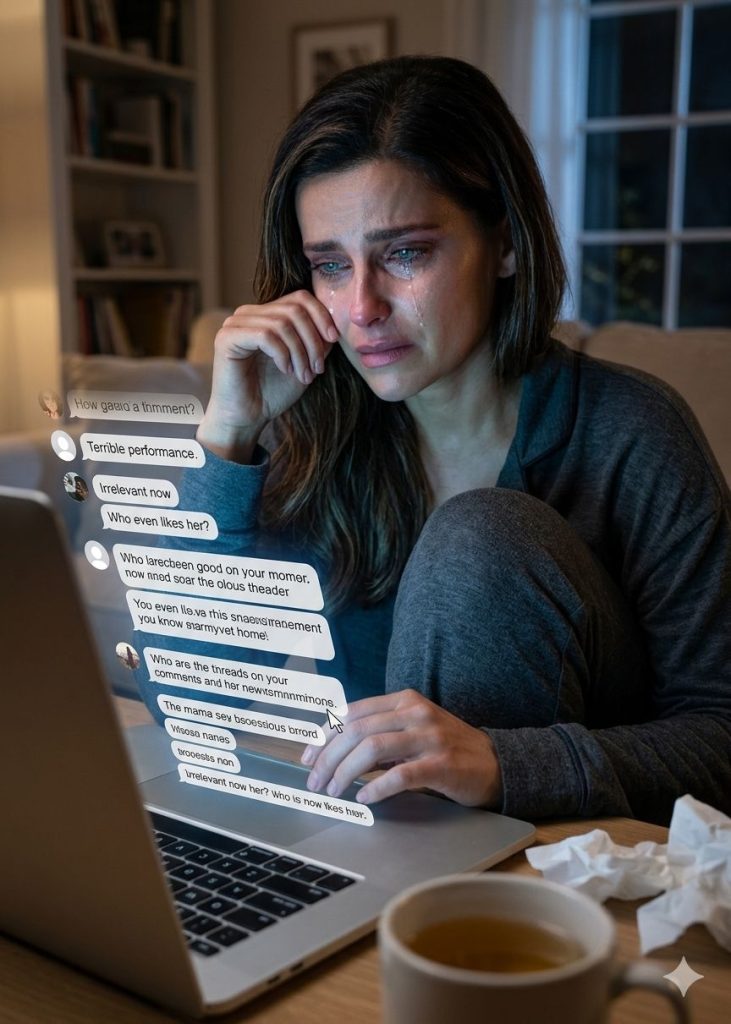
“You know what it feels like online?” she said. “I’m basically a verbal punching bag. Millions of strangers taking swings every day.”
Joe didn’t interrupt.
“They tear apart my weight, my face, my life,” she continued. “And the crazy thing is—entertainers didn’t create the world’s problems.”
She pointed toward the ceiling like she was addressing the sky.
“Politicians did that.”
Joe raised an eyebrow.
Nelly sighed.
“And when I try to talk about solutions… like debt forgiveness, or helping poor people…”
She gave a bitter laugh.
“Suddenly the Trump-tards show up saying I’m insane and unhinged.”
Joe shook his head.
“That’s the internet for you.”
Nelly looked at him seriously.
“I’m not the one bombing children,” she said quietly. “But somehow the singer becomes the villain.”
Joe sat down beside her.
“Well,” he said, shrugging, “I don’t give a Borat’s ass what those people say.”
He gestured vaguely toward the imaginary internet.
“Half of them are neckbeard chicken-tendie addicts screaming into the void.”
Nelly cracked a small smile.
Joe nudged her shoulder.
“You know what you are to me?”
“What?”
“My wing woman.”
She laughed.
“Wing woman?”
“Yeah,” Joe said. “And if my wing woman is getting beat up by the internet…”