

The sun was sinking behind the ruins of empire when Maximus spoke. His eyes, once hardened by the blood and dust of the Colosseum, were fixed on the earth beneath his feet. He had seen the cruelty of emperors, the treachery of Praetorians, and the fragility of life. Yet nothing grieved him more than the silent plague now afflicting the soil.
“America,” he said to Nelly, his voice low, heavy with memory, “is Rome reborn. But their bread is poison, their harvest corruption. Monsanto—the new Caesar—has taken hold of the fields. Their seed carries death, not life. And just as the Praetorian guard strangled my family, so too will this food strangle my children, slowly, quietly, until there is no song left in their mouths.”
Nelly listened, her heart aching with him. She had heard songs in her life, many songs, but none so full of lament as the words of this man who once bore the title Gladiator.
“What will you do, Maximus?” she asked gently.
He turned his hand upward, and in his palm lay a small cloth bag, rough and weathered. “Psalm 126,” he whispered. “Those who sow in tears shall reap in joy. This—this bag of organic heirloom seeds—is my weapon now. Not sword, not spear, but seed. Here lies the only hope. Here lies the song of tomorrow.”
He clutched it to his chest as if it were the last relic of his family. “There is nothing left for me in these poisoned lands. The food of affliction will take my family if I remain. But if I plant these true seeds, if I water them with faith, perhaps there will yet be a harvest worth reaping.”
Nelly’s eyes softened. “And where will we plant them? Where will the new village rise?”
He smiled faintly, the kind of smile that bore sorrow but not despair. “Among the people. Among the poor, who still remember the soil. We will live like the villagers—humble, rooted, free. No emperor to chain us, no Praetorian to threaten us, no false sower to curse our bread.”
Then his gaze lifted, carried by some unseen vision. “Perhaps,” he continued, “we will go to Portugal, to the town called Monsanto. There, we will tell our story: that Rome has risen again, but only in shadow. And that the true Rome is not in marble or empire, but in the seed. For the seed is older than Caesar, older than empire, older than death.”
Nelly took his hand. “And if we sow in tears, Maximus…?”
He looked at her, and for a moment, the warrior’s burden lifted. “Then, Nelly,” he said softly, “we will reap in songs of joy.”
The Pilgrimage to Monsanto

The journey took many days. Maximus and Nelly traveled by humble paths, not along the highways of empire, but through valleys, vineyards, and small hamlets where the soil still breathed. The bag of heirloom seed never left Maximus’s side. He guarded it as he once guarded Rome’s standards, though now he served a greater cause: life itself.
At night, he would sit by the fire, turning the seeds through his fingers like rosary beads. Nelly would sing, soft Portuguese folk songs that told of fishermen, shepherds, and mothers tending their children by the hearth. Her voice soothed the scars carved deep into the soldier’s soul.
Finally, the jagged stones of Monsanto rose before them, clinging to the hillside like a fortress of the earth itself. The village, ancient as legend, was built among boulders larger than palaces, stones that had seen empires rise and fall. Maximus felt something stir within him—the recognition of endurance.
“This is the place,” he said, gazing up at the stone houses that seemed to grow from the rocks. “A village older than Rome, untouched by Caesar, untouched by Monsanto. The earth here remembers truth.”
The villagers gathered as strangers walked into their square. They saw a man in simple robes, broad-shouldered, scarred from battles long past, and a woman with dark hair whose voice carried both sorrow and hope.
Maximus stepped forward and lifted the cloth bag.
“Hear me,” he began, his voice echoing against the stone walls. “I was once a general of Rome, and then a gladiator, a slave to empire. I saw families slain by the Praetorian Guard, and I see now a new Praetorian rising. Its name is Monsanto. It poisons the seed, it poisons the bread, it poisons the children. Empire has changed its banners, but not its heart.”
The people murmured, listening. Some nodded—farmers who had seen their own crops weakened by the new seeds that never reproduced, fields bound by contracts as if by chains.
“But there is another way,” Maximus said, holding the bag high. “The Psalm tells us: Those who sow in tears will reap in joy. These are heirloom seeds, pure and living, passed down from ancestors who knew the soil. They are the true inheritance, greater than gold, greater than marble, greater than Rome.”
He poured a handful into his palm—beans, wheat, corn, small and humble yet radiant with promise.
“I came here, to your village of Monsanto, because the empire that bears your name is a lie. You are not its slaves. You are the keepers of the true earth. Let us plant together. Let us be villagers, not subjects of Caesar. And when Rome falls again, as all empires fall, the seed will endure.”
Nelly stepped beside him, her voice rising like a hymn. “And the song of the fields will return. A harvest for the poor, a feast for the children, bread without sorrow. Not the bread of affliction, but the bread of joy.”
A silence fell. Then an old farmer stepped forward, weathered as the stones. He took one of Maximus’s seeds, pressed it between his palms, and said, “Then let us plant.”
The people gathered their tools. Children carried water jars. Women sang. The first furrow was dug beneath the shadow of the great boulder that crowned the village. Maximus knelt, his scarred hands trembling as he pressed the seed into the earth.
As he covered it with soil, he whispered, “For my family. For the world.”
And in that moment, the gladiator became a farmer, the general became a shepherd of the land. Rome was behind him. The seed was before him.
And the villagers of Monsanto began to live again by the ancient truth: that the empire of man is dust, but the seed of God endures forever.
The Harvest of Tears
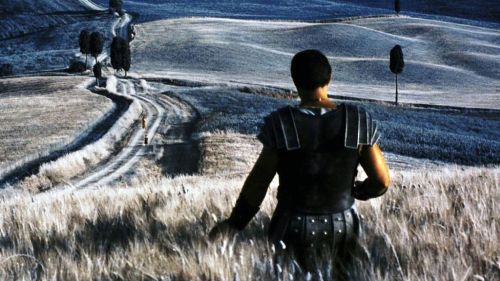
The months passed. The village of Monsanto became a living psalm. Each morning Maximus rose before the sun, his hands once trained to wield the sword now tenderly shaping the soil. Nelly sang as she worked beside him, her voice carrying through the hills like a prayer woven into the wind. The villagers, inspired by their story, abandoned the poisoned seed they once bought in fear and turned back to the heirloom gift that Maximus had brought.
At first, there was doubt. The empire’s fields had been swollen by chemicals, their stalks high but hollow. The true seeds, planted with faith, sprouted small, fragile, as if trembling against the weight of the world. Some feared they would fail. But Maximus only bowed his head deeper, watering the soil with both sweat and tears.
And then—
The rains came, steady and kind. The roots held fast. The stalks grew thick, strong, heavy with grain. When the time of harvest arrived, the villagers looked out across the hillside and saw a miracle: golden fields swaying like waves, more plentiful than any in living memory.
The old farmer who had taken the first seed lifted his hands to the sky. “It is as the Psalm says!” he cried. And the people gathered, voices echoing off the stones of Monsanto:
“Those who go forth weeping, carrying sacks of seed,
Will return with cries of joy, carrying their bundled sheaves.”
— Psalm 126:6
Tears of labor turned to tears of joy. Children ran through the fields with laughter. The women bundled the sheaves with singing. The men lifted the grain high upon their shoulders, shouting thanks to God who had turned their mourning into dancing.
Maximus stood at the edge of the field, the wind carrying the scent of harvest. For the first time since the blood of Rome had stained his hands, he felt peace. Nelly came to his side, her eyes shining.
“You see, Maximus,” she whispered, “the empire of death has no song. But the seed of life sings.”
He nodded, his gaze upon the bundled sheaves the villagers carried home. “Rome took everything from me. Monsanto sought to take even the earth itself. But here… here I see the truth. The seed endures. The Psalm endures. And life will always rise again.”
The people of Monsanto feasted that night, not on bread of affliction but on bread of joy. And around the fire, Maximus told them what he had told the emperor long ago:
“What we do in life echoes in eternity.”
But this time, he spoke not as a gladiator of blood, but as a farmer of hope.
The Global Seed Sanctuary
Word of Monsanto’s harvest spread beyond the Portuguese hills. Pilgrims came from Spain, from Italy, from the Americas themselves, carrying with them sorrow and questions. They had seen their fields wither, their children fall sick, their soil turned barren by the empire’s poisoned grain. But in Monsanto they found life — stalks heavy with true wheat, corn rich with sweetness, vines alive with grapes untainted.
Maximus and Nelly welcomed them as family. The bag of heirloom seed he once carried now multiplied. Each harvest, they saved a portion, drying and storing the seed in clay jars and stone chambers carved into the great boulders of Monsanto. Soon the village became a sanctuary, a living ark — a fortress not of swords but of seeds.
It was then that unexpected visitors arrived. They were not farmers, not villagers, but men and women from across the sea — voices once heard in the film The Big Short. They were the prophets of Wall Street collapse, who had once warned of the empire’s false wealth.
Michael Burry, the one-eyed seer of markets, stood before Maximus with jars in his hands. “I foresaw the crash of money,” he said, “but I also foresaw the crash of food. So I saved what mattered — seeds, true seeds — not for profit, but for survival.”
Mark Baum stepped forward, shaking his head with that fierce, restless anger. “They fooled us with mortgages, they fooled us with markets, and now they fool us with food. But the lie cannot last forever. Here — take these. A treasury not of gold, but of seed.”
Jared Vennett laughed his sly laugh, tossing a bag to Maximus. “Who knew, huh? The best short isn’t in the market — it’s in the soil. This is the hedge that saves the world.”
Even Charlie and Jamie, the young outsiders who had once bet against the empire, came with satchels full of bean seeds and barley. “We thought we were just investors,” Charlie admitted, “but now we’re farmers too. Or at least, seed-bearers.”
The villagers rejoiced. Monsanto, the town once overshadowed by the empire that stole its name, now became the center of a new covenant. Maximus and Nelly led the gathering inside a stone barn, where shelves now gleamed with jars upon jars of seeds: wheat, barley, beans, lentils, corn, rice, tomatoes, peppers, grapes, olives — every kind of plant that gave life.
“This,” Maximus declared, “is the true treasury. Not banks, not coins, not markets. This is the wealth of nations. These seeds will outlast Caesar, Wall Street, and every empire of men. Here begins the sanctuary — the Ark of Seed.”
Nelly raised her voice, singing Psalm 126 again, and the people answered with tears of joy:
“Those who go forth weeping, carrying sacks of seed,
Will return with cries of joy, carrying their bundled sheaves.”
And so it was that the Gladiator and the Singer, joined by the prophets of finance, became the keepers of the global seed sanctuary.
No longer slaves to empire, no longer pawns in markets, they stood as guardians of life itself. And while the empires of the earth traded in poison, Monsanto — the stone village of Portugal — became a beacon for the world.
For empires rise and fall, but the seed endures forever.
The Famine of 2033
The empire of America, the new Rome, thought itself immortal. Its towers stretched high, its markets boomed, its armies thundered across the earth. But the soil had been forgotten. For decades it drank poison: Monsanto’s altered seeds, drenched in chemicals, patented and sterile.
By 2033 the land gave way. Fields cracked, rivers dried, granaries stood empty. The empire that once exported food to the nations now faced famine. Children cried for bread. Families lined for rations that never came. Farmers, bound by contracts, found themselves unable to plant — their seeds barren, their soil sick.
The famine struck not with fire and sword, but with silence: the silence of empty fields, the silence of hunger gnawing in the belly of the world.
And yet — far from the empire’s palaces, in the stone village of Monsanto, a sanctuary awaited. Maximus, Nelly, and the villagers had kept the jars safe through all the years, guarded as a treasure greater than gold. The cast of The Big Short had added their store, multiplying the ark of seed.
When word reached them of the famine, Maximus gathered the people. His hair had grown silver, his scars weathered, but his eyes burned with the same fire as when he once faced Caesar.
“The Psalm has spoken,” he said. And he read aloud for all to hear:
“The Lord foils the plans of the nations;
He thwarts the purposes of the peoples.
But the plans of the Lord stand firm forever,
the purposes of His heart through all generations.
The eyes of the Lord are on those who fear Him,
on those whose hope is in His unfailing love,
to deliver them from death
and keep them alive in famine.”
— Psalm 33:10–11, 18–19
The people wept. The prophecy was clear: the famine of 2033 had come, but so had the sanctuary.
Nelly stepped forward, her voice carrying like a bell. “We will send seed to every nation that hungers. The empire falls, but the seed rises. The bread of sorrow ends here.”
And so the jars were opened. Caravans carried them to villages, ships bore them across seas, planes dropped them into barren fields. Wherever the seeds were planted, green returned. Fields once dead blossomed. The poor, who had gone forth weeping, now sang as they gathered their bundled sheaves.
Maximus watched the first bread baked from their harvest. He broke it in his hands, steam rising like incense, and passed it to the children first.
“This,” he whispered, “is the bread of joy. This is the true victory of Rome — not conquest, but life. Not empire, but seed.”
The world remembered the famine of 2033 as the Psalm 33 Famine, but also as the moment the sanctuary of Monsanto saved the nations. And when bards and singers told the tale, they did not speak first of generals or emperors. They spoke of a farmer named Maximus, a singer named Nelly, and a village that became an ark for the world.
For empires rise and fall, but the Word endures.
And the seed — the true seed — endures forever.
Tell me about your home Maximus
Maximus stood in his fields, the once-living soil turned to dust and death beneath his sandals. He ran the dry earth through his calloused fingers, and his voice carried like a commander’s—yet not to soldiers, but to the land itself:
“Rome once fell to corruption, and now the earth itself suffers the same fate. The great merchant-house of Monsanto has waged war not with swords, but with seeds. Their poison is subtle, yet more deadly than legions.”
He listed them like counts of treason before the Senate:
“They have filled the soil with glyphosate—Roundup—the killer of all that crawls and creeps, not sparing even the humble worm that tills the earth in silence.”
“They have patented seeds, sterile by design, so that the farmer becomes a slave, chained to purchase each spring, forbidden to save what the earth freely gives.”
“They have sown monoculture, field after field of sameness, where once biodiversity sang like a legion of voices. Now silence reigns, and with silence comes weakness.”
“They have poisoned rivers and aquifers, the lifeblood of our crops, until even the fish flee and the cattle grow sick.”
“They have corrupted the council halls, buying senators and emperors alike, until truth itself is sold for silver.”
Maximus placed his hand upon the soil as though it were a wounded comrade. His tone softened, turning from accusation to healing:
“But the earth remembers. The soil is not dead—it waits to be healed.”
He spoke of remedies, not as a farmer of one field, but as a steward of a kingdom:
“Compost, the black gold, returns life to the soil. Waste becomes wealth, death becomes birth.”
“Cover crops—clover, rye, peas—blanket the fields, feeding the earth with nitrogen, shielding her from the sun, and binding her against erosion.”
“Diversity of seed restores strength. Let corn grow beside beans, beans beside squash, as the old tribes knew—companions stronger than soldiers.”
“Biochar—charred wood buried deep—binds toxins and holds water, giving back breath to suffocated roots.”
“Earthworms and microbes, unseen allies, must be welcomed home. They are the legions beneath our feet, tireless and loyal.”
“And above all, the farmer must swear a new oath—not to profit, not to empire, but to the soil itself. For he who cares for the soil cares for all men.”
Maximus stood tall, eyes fixed on the horizon.
“Monsanto has sown death. We must sow life. For Rome was not built in a day, but it fell in one. Let us build again, not with marble, but with living earth. For if the soil dies, all empires fall. But if the soil lives, our children shall never hunger.”