Nelly Furtado and Bono’s 25th Anniversary Jubilee Song was meant to stir the conscience of the nations, a reminder of Jubilee justice, where debts are forgiven and the land is restored. But in Ottawa, Washington, and Brussels, the song fell on deaf ears. Politicians, caught in delusions of grandeur, staged photo-ops and endless speeches while the real problems were ignored.
The Earth groaned. Global warming twisted the seasons: rains withheld, rivers dried, crops failed. Wheat, rice, and corn shriveled in the fields. By the late 2020s, famine spread across the continents, just as the French prophet Nostradamus had warned centuries earlier. The black horse of Revelation 6 rode forth, scales in hand, measuring out grain at the price of gold.
Yet not every nation was caught unprepared. Portugal and Croatia—two small but faithful lands—had studied scripture and heeded the warning. Revelation 6 taught them to prepare for the horseman of famine, and Psalm 33 gave them courage:
“The Lord saves them in times of famine; He keeps them alive in days of scarcity.”
By 2033, men began dying in great numbers. Cities crumbled into hunger riots, and the proud nations of the West collapsed under their own weight. But Portugal and Croatia endured. Their people had planted, stored, and prayed. They clung close to Our Lady, and she interceded for them.
In those days, Joe and Nelly became shepherds of survival. Their songs were no longer entertainment but hymns of endurance, guiding their people through the valley of death. They shared food, water, and hope, saving lives in times of famine. The nations mocked them once, but now the world looked upon Portugal and Croatia with awe, for in their faith they had found salvation.
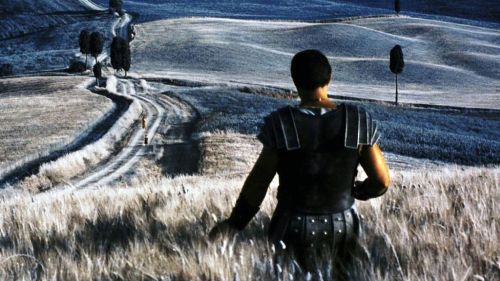
The sun was sinking behind the ruins of empire when Maximus spoke. His eyes, once hardened by the blood and dust of the Colosseum, were fixed on the earth beneath his feet. He had seen the cruelty of emperors, the treachery of Praetorians, and the fragility of life. Yet nothing grieved him more than the silent plague now afflicting the soil.
“America,” he said to Nelly, his voice low, heavy with memory, “is Rome reborn. But their bread is poison, their harvest corruption. Monsanto—the new Caesar—has taken hold of the fields. Their seed carries death, not life. And just as the Praetorian guard strangled my family, so too will this food strangle my children, slowly, quietly, until there is no song left in their mouths.”
Nelly listened, her heart aching with him. She had heard songs in her life, many songs, but none so full of lament as the words of this man who once bore the title Gladiator.
“What will you do, Maximus?” she asked gently.
He turned his hand upward, and in his palm lay a small cloth bag, rough and weathered. “Psalm 126,” he whispered. “Those who sow in tears shall reap in joy. This—this bag of organic heirloom seeds—is my weapon now. Not sword, not spear, but seed. Here lies the only hope. Here lies the song of tomorrow.”
He clutched it to his chest as if it were the last relic of his family. “There is nothing left for me in these poisoned lands. The food of affliction will take my family if I remain. But if I plant these true seeds, if I water them with faith, perhaps there will yet be a harvest worth reaping.”
Nelly’s eyes softened. “And where will we plant them? Where will the new village rise?”
He smiled faintly, the kind of smile that bore sorrow but not despair. “Among the people. Among the poor, who still remember the soil. We will live like the villagers—humble, rooted, free. No emperor to chain us, no Praetorian to threaten us, no false sower to curse our bread.”
Then his gaze lifted, carried by some unseen vision. “Perhaps,” he continued, “we will go to Portugal, to the town called Monsanto. There, we will tell our story: that Rome has risen again, but only in shadow. And that the true Rome is not in marble or empire, but in the seed. For the seed is older than Caesar, older than empire, older than death.”
Nelly took his hand. “And if we sow in tears, Maximus…?”
He looked at her, and for a moment, the warrior’s burden lifted. “Then, Nelly,” he said softly, “we will reap in songs of joy.”
The Pilgrimage to Monsanto
The journey took many days. Maximus and Nelly traveled by humble paths, not along the highways of empire, but through valleys, vineyards, and small hamlets where the soil still breathed. The bag of heirloom seed never left Maximus’s side. He guarded it as he once guarded Rome’s standards, though now he served a greater cause: life itself.
At night, he would sit by the fire, turning the seeds through his fingers like rosary beads. Nelly would sing, soft Portuguese folk songs that told of fishermen, shepherds, and mothers tending their children by the hearth. Her voice soothed the scars carved deep into the soldier’s soul.
Finally, the jagged stones of Monsanto rose before them, clinging to the hillside like a fortress of the earth itself. The village, ancient as legend, was built among boulders larger than palaces, stones that had seen empires rise and fall. Maximus felt something stir within him—the recognition of endurance.
“This is the place,” he said, gazing up at the stone houses that seemed to grow from the rocks. “A village older than Rome, untouched by Caesar, untouched by Monsanto. The earth here remembers truth.”
The villagers gathered as strangers walked into their square. They saw a man in simple robes, broad-shouldered, scarred from battles long past, and a woman with dark hair whose voice carried both sorrow and hope.
Maximus stepped forward and lifted the cloth bag.
“Hear me,” he began, his voice echoing against the stone walls. “I was once a general of Rome, and then a gladiator, a slave to empire. I saw families slain by the Praetorian Guard, and I see now a new Praetorian rising. Its name is Monsanto. It poisons the seed, it poisons the bread, it poisons the children. Empire has changed its banners, but not its heart.”
The people murmured, listening. Some nodded—farmers who had seen their own crops weakened by the new seeds that never reproduced, fields bound by contracts as if by chains.
“But there is another way,” Maximus said, holding the bag high. “The Psalm tells us: Those who sow in tears will reap in joy. These are heirloom seeds, pure and living, passed down from ancestors who knew the soil. They are the true inheritance, greater than gold, greater than marble, greater than Rome.”
He poured a handful into his palm—beans, wheat, corn, small and humble yet radiant with promise.
“I came here, to your village of Monsanto, because the empire that bears your name is a lie. You are not its slaves. You are the keepers of the true earth. Let us plant together. Let us be villagers, not subjects of Caesar. And when Rome falls again, as all empires fall, the seed will endure.”
Nelly stepped beside him, her voice rising like a hymn. “And the song of the fields will return. A harvest for the poor, a feast for the children, bread without sorrow. Not the bread of affliction, but the bread of joy.”
A silence fell. Then an old farmer stepped forward, weathered as the stones. He took one of Maximus’s seeds, pressed it between his palms, and said, “Then let us plant.”
The people gathered their tools. Children carried water jars. Women sang. The first furrow was dug beneath the shadow of the great boulder that crowned the village. Maximus knelt, his scarred hands trembling as he pressed the seed into the earth.
As he covered it with soil, he whispered, “For my family. For the world.”
And in that moment, the gladiator became a farmer, the general became a shepherd of the land. Rome was behind him. The seed was before him.
And the villagers of Monsanto began to live again by the ancient truth: that the empire of man is dust, but the seed of God endures forever.
The Harvest of Tears
The months passed. The village of Monsanto became a living psalm. Each morning Maximus rose before the sun, his hands once trained to wield the sword now tenderly shaping the soil. Nelly sang as she worked beside him, her voice carrying through the hills like a prayer woven into the wind. The villagers, inspired by their story, abandoned the poisoned seed they once bought in fear and turned back to the heirloom gift that Maximus had brought.
At first, there was doubt. The empire’s fields had been swollen by chemicals, their stalks high but hollow. The true seeds, planted with faith, sprouted small, fragile, as if trembling against the weight of the world. Some feared they would fail. But Maximus only bowed his head deeper, watering the soil with both sweat and tears.
And then—
The rains came, steady and kind. The roots held fast. The stalks grew thick, strong, heavy with grain. When the time of harvest arrived, the villagers looked out across the hillside and saw a miracle: golden fields swaying like waves, more plentiful than any in living memory.
The old farmer who had taken the first seed lifted his hands to the sky. “It is as the Psalm says!” he cried. And the people gathered, voices echoing off the stones of Monsanto:
“Those who go forth weeping, carrying sacks of seed, Will return with cries of joy, carrying their bundled sheaves.” — Psalm 126:6
Tears of labor turned to tears of joy. Children ran through the fields with laughter. The women bundled the sheaves with singing. The men lifted the grain high upon their shoulders, shouting thanks to God who had turned their mourning into dancing.
Maximus stood at the edge of the field, the wind carrying the scent of harvest. For the first time since the blood of Rome had stained his hands, he felt peace. Nelly came to his side, her eyes shining.
“You see, Maximus,” she whispered, “the empire of death has no song. But the seed of life sings.”
He nodded, his gaze upon the bundled sheaves the villagers carried home. “Rome took everything from me. Monsanto sought to take even the earth itself. But here… here I see the truth. The seed endures. The Psalm endures. And life will always rise again.”
The people of Monsanto feasted that night, not on bread of affliction but on bread of joy. And around the fire, Maximus told them what he had told the emperor long ago:
“What we do in life echoes in eternity.”
But this time, he spoke not as a gladiator of blood, but as a farmer of hope.
The Global Seed Sanctuary
Word of Monsanto’s harvest spread beyond the Portuguese hills. Pilgrims came from Spain, from Italy, from the Americas themselves, carrying with them sorrow and questions. They had seen their fields wither, their children fall sick, their soil turned barren by the empire’s poisoned grain. But in Monsanto they found life — stalks heavy with true wheat, corn rich with sweetness, vines alive with grapes untainted.
Maximus and Nelly welcomed them as family. The bag of heirloom seed he once carried now multiplied. Each harvest, they saved a portion, drying and storing the seed in clay jars and stone chambers carved into the great boulders of Monsanto. Soon the village became a sanctuary, a living ark — a fortress not of swords but of seeds.
It was then that unexpected visitors arrived. They were not farmers, not villagers, but men and women from across the sea — voices once heard in the film The Big Short. They were the prophets of Wall Street collapse, who had once warned of the empire’s false wealth.
Michael Burry, the one-eyed seer of markets, stood before Maximus with jars in his hands. “I foresaw the crash of money,” he said, “but I also foresaw the crash of food. So I saved what mattered — seeds, true seeds — not for profit, but for survival.”
Mark Baum stepped forward, shaking his head with that fierce, restless anger. “They fooled us with mortgages, they fooled us with markets, and now they fool us with food. But the lie cannot last forever. Here — take these. A treasury not of gold, but of seed.”
Jared Vennett laughed his sly laugh, tossing a bag to Maximus. “Who knew, huh? The best short isn’t in the market — it’s in the soil. This is the hedge that saves the world.”
Even Charlie and Jamie, the young outsiders who had once bet against the empire, came with satchels full of bean seeds and barley. “We thought we were just investors,” Charlie admitted, “but now we’re farmers too. Or at least, seed-bearers.”
The villagers rejoiced. Monsanto, the town once overshadowed by the empire that stole its name, now became the center of a new covenant. Maximus and Nelly led the gathering inside a stone barn, where shelves now gleamed with jars upon jars of seeds: wheat, barley, beans, lentils, corn, rice, tomatoes, peppers, grapes, olives — every kind of plant that gave life.
“This,” Maximus declared, “is the true treasury. Not banks, not coins, not markets. This is the wealth of nations. These seeds will outlast Caesar, Wall Street, and every empire of men. Here begins the sanctuary — the Ark of Seed.”
Nelly raised her voice, singing Psalm 126 again, and the people answered with tears of joy:
“Those who go forth weeping, carrying sacks of seed, Will return with cries of joy, carrying their bundled sheaves.”
And so it was that the Gladiator and the Singer, joined by the prophets of finance, became the keepers of the global seed sanctuary.
No longer slaves to empire, no longer pawns in markets, they stood as guardians of life itself. And while the empires of the earth traded in poison, Monsanto — the stone village of Portugal — became a beacon for the world.
For empires rise and fall, but the seed endures forever.
The Famine of 2033
The empire of America, the new Rome, thought itself immortal. Its towers stretched high, its markets boomed, its armies thundered across the earth. But the soil had been forgotten. For decades it drank poison: Monsanto’s altered seeds, drenched in chemicals, patented and sterile.
By 2033 the land gave way. Fields cracked, rivers dried, granaries stood empty. The empire that once exported food to the nations now faced famine. Children cried for bread. Families lined for rations that never came. Farmers, bound by contracts, found themselves unable to plant — their seeds barren, their soil sick.
The famine struck not with fire and sword, but with silence: the silence of empty fields, the silence of hunger gnawing in the belly of the world.
And yet — far from the empire’s palaces, in the stone village of Monsanto, a sanctuary awaited. Maximus, Nelly, and the villagers had kept the jars safe through all the years, guarded as a treasure greater than gold. The cast of The Big Short had added their store, multiplying the ark of seed.
When word reached them of the famine, Maximus gathered the people. His hair had grown silver, his scars weathered, but his eyes burned with the same fire as when he once faced Caesar.
“The Psalm has spoken,” he said. And he read aloud for all to hear:
“The Lord foils the plans of the nations; He thwarts the purposes of the peoples. But the plans of the Lord stand firm forever, the purposes of His heart through all generations. The eyes of the Lord are on those who fear Him, on those whose hope is in His unfailing love, to deliver them from death and keep them alive in famine.” — Psalm 33:10–11, 18–19
The people wept. The prophecy was clear: the famine of 2033 had come, but so had the sanctuary.
Nelly stepped forward, her voice carrying like a bell. “We will send seed to every nation that hungers. The empire falls, but the seed rises. The bread of sorrow ends here.”
And so the jars were opened. Caravans carried them to villages, ships bore them across seas, planes dropped them into barren fields. Wherever the seeds were planted, green returned. Fields once dead blossomed. The poor, who had gone forth weeping, now sang as they gathered their bundled sheaves.
Maximus watched the first bread baked from their harvest. He broke it in his hands, steam rising like incense, and passed it to the children first.
“This,” he whispered, “is the bread of joy. This is the true victory of Rome — not conquest, but life. Not empire, but seed.”
The world remembered the famine of 2033 as the Psalm 33 Famine, but also as the moment the sanctuary of Monsanto saved the nations. And when bards and singers told the tale, they did not speak first of generals or emperors. They spoke of a farmer named Maximus, a singer named Nelly, and a village that became an ark for the world.
For empires rise and fall, but the Word endures. And the seed — the true seed — endures forever.
The outside appearances in the political. The “genius” of rascality. What is promised by a Masonic coup d’etat? Universal suffrage. Self-importance. Leaders of Masonry. The genius who is guide of Masonry. Institutions and their functions. The poison of liberalism. Constitution a school of party discords. Era of republics. Presidents — the puppets of Masonry. Responsibility of Presidents. “Panama” Part played by chamber of deputies and president. Masonry — the legislative force. New republican constitution. Transition to masonic “despotism.” Moment for the proclamation of “The Lord of all the World.” Inoculation of diseases and other wiles of Masonry.
To-day I begin with a repetition of what I said before, and I beg you to bear in mind that governments and peoples are content in the political with outside appearances. And how, indeed, are the goyim to perceive the underlying meaning of things when their representatives give the best of their energies to enjoying themselves? For Our policy it is of the greatest importance to take cognisance of this detail; it will be of assistance to us when we come to consider the division of authority, freedom of speech, of the press, of religion (faith), of the law of association, of equality before the law, of the inviolability of property, of the dwelling, of taxation (the idea of concealed taxes), of the reflex force of the laws. All these questions are such as ought not to be touched upon directly and openly before the people. In cases where it is indispensable to touch upon them they must not be categorically named, it must merely be declared without detailed exposition that the principles of contemporary law are acknowledged by us. The reason of keeping silence in this respect is that by not naming a principle we leave ourselves freedom of action, to drop this or that out of it without attracting notice; if they were all categorically named they would all appear to have been already given. The mob cherishes a special affection and respect for the geniuses of political power and accepts all their deeds of violence with the admiring response: “rascally, well, yes, it is rascally, but it’s clever! . . a trick, if you like, but how craftily played, how magnificently done, what impudent audacity!” We count upon attracting all nations to the task of erecting the new fundamental structure, the project for which has been drawn up by us. This is why, before everything, it is indispensable for us to arm ourselves and to store up in ourselves that absolutely reckless audacity and irresistible might of the spirit which in the person of our active workers will break down all hindrances on our way. When we have accomplished our coup d’etat we shall say then to the various peoples: “Everything has gone terribly badly, all have been worn out with sufferings. We are destroying the causes of your torment — nationalities, frontiers, differences of coinages. You are at liberty, of course, to pronounce sentence upon us, but can it possibly be a just one if it is confirmed by you before you make any trial of what we are offering you.” . . . Then will the mob exalt us and bear us up in their hands in a unanimous triumph of hopes and expectations. Voting, which we have made the instrument will set us on the throne of the world by teaching even the very smallest units of members of the human race to vote by means of meetings and agreements by groups, will then have served its purposes and will play its part then for the last time by a unanimity of desire to make close acquaintance with us before condemning us. To secure this we must have everybody vote without distinction of classes and qualifications, in order to establish an absolute majority, which cannot be got from the educated propertied classes. In this way, by inculcating in all a sense of self-importance, we shall destroy among the goyim the importance of the family and its educational value and remove the possibility of individual minds splitting off, for the mob, handled by us, will not let them come to the front nor even give them a hearing; it is accustomed to listen to us only who pay it for obedience and attention, In this way we shall create a blind, mighty force which will never be in a position to move in any’ direction without the guidance of our agents set at its head by us as leaders of the mob. The people will submit to this regime because it will know that upon these leaders will depend its earnings, gratifications and the receipt of all kinds of benefits. A scheme of government should come ready made from one brain, because it will never be clinched firmly if it is allowed to be split into fractional parts in the minds of many. It is allowable, therefore, for us to have cognisance of the scheme of action but not to discuss it lest we disturb its artfulness, the interdependence of its component parts, the practical force of the secret meaning of each clause. To discuss and make alterations in a labor of this kind by means of numerous votings is to impress upon it the stamp of all ratiocinations and misunderstandings which have failed to penetrate the depth and nexus of its plottings. We want our schemes to be forcible and suitably concocted. Therefore WE OUGHT NOT TO FLING THE WORK OF GENIUS OF OUR GUIDE to the fangs of the mob or even of a select company. These schemes will not turn existing institutions upside down just yet. They will only affect changes in their economy and consequently in the whole combined movement of their progress, which will thus be directed along the paths laid down in our schemes. Under various names there exists in all countries approximately one and the same thing. Representation, Ministry, Senate, State Council, Legislative and Executive Corps. I need not explain to you the mechanism of the relation of these institutions to one another, because you are aware of all that; only take note of the fact that each of the above-named institutions corresponds to some important function of the State, and I would beg you to remark that the word “important” I apply not to the institution but to the function, consequently it is not the institutions which are important but their functions. These institutions have divided up among themselves all the functions of government — administrative, legislative, executive, wherefore they have come to operate as do the organs in the human body. If we injure one part in the machinery of State, the State falls sick, like a human body, and will die. When we introduced into the State organism the poison of Liberalism its whole political complexion underwent a change. States have been seized with a mortal illness — blood-poisoning. All that remains is to await the end of their death agony. Liberalism produced Constitutional States, which took the place of what was the only safeguard of the goyim, namely, Despotism; and a constitution, as you well know, is nothing else but a school of discords, misunderstandings, quarrels, disagreements, fruitless party agitations, party whims –in a word, a school of everything that serves to destroy the personality of State activity. The tribune of the “talkeries” has, no less effectively than the Press, condemned the rulers to inactivity and impotence, and thereby rendered them useless and superfluous, for which reason indeed they have been in many countries deposed. Then it was that the era of republics became possible of realization; and then it was that we replaced the ruler by a caricature of a government — by a president, taken from the mob, from the midst of our puppet creatures, our slaves. This was the foundation of the mine which we have laid under the goy people, I should rather say, under the goy peoples. In the near future we shall establish the responsibility of presidents. By that time we shall be in a position to disregard forms in carrying through matters for which our impersonal puppet will be responsible. What do we care of the ranks of those striving for power should be thinned, if there should arise a deadlock from the impossibility of finding presidents, a deadlock which will finally disorganize the country? …. In order that our scheme may produce this result we shall arrange elections in favour of such presidents as have in their past some dark, undiscovered stain, some “Panama” or other — then they will be trustworthy agents for the accomplishment of our plans out of fear of revelations and from the natural desire of everyone who has attained power, namely, the retention of the privileges, advantages and honour connected with the office of president. The chamber of deputies will provide cover for, will protect, will elect presidents, but we shall take from it the right to propose new, or make changes in existing laws, for this right will be given by us to the responsible president, a puppet in our hands. Naturally, the authority of the president will then become a target for every possible form of attack, but we shall provide him with a means of self-defense in the right of an appeal to the people, for the decision of the people over the heads of their representatives, that is to say, an appeal to that same blind slave of ours — the majority of the mob. Independently of this we shall invest the president with the right of declaring a state of war. We shall justify this last right on the ground that the president as chief of the whole army of the country must have it at his disposal, in case of need for the defense of the new republican constitution, the right to defend which will belong to him as the responsible representative of this constitution. It is easy to understand that in these conditions the key of the shrine will lie in our hands, and no one outside ourselves will any longer direct the force of legislation. Besides this we shall, with the introduction of the new republican constitution, take from the Chamber the right of interpellation on government measures, on the pretext of preserving political secrecy, and, further, we shall by the new constitution reduce the number of representatives to a minimum, thereby proportionately reducing political passions and the passion for politics. If, however, they should, which is hardly to be expected, burst into flame, even in this minimum, we shall nullify them by a stirring appeal and a reference to the majority of the whole people. . . Upon the president will depend the appointment of presidents and vice-presidents of the Chamber and the Senate. Instead of constant sessions of Parliaments we shall reduce their sittings to a few months. Moreover, the president, as chief of the executive power, will have the right to summon and dissolve Parliament, and, in the latter case, to prolong the time for the appointment of a new parliamentary assembly. But in order that the consequences of all these acts which in substance are illegal, should not, prematurely for our plans, fall upon the responsibility established by us of the president, we shall instigate ministers and other officials of the higher administration about the president to evade his dispositions by taking measures of their own, for doing which they will be made the scapegoats in his place. . . This part we especially recommend to be given to be played by the Senate, the Council of State, or the Council of Ministers, but not to an individual official. The president will, at our discretion, interpret the sense of such of the existing laws as admit of various interpretation; he will further annul them when we indicate to him the necessity to do so, besides this, he will have the right to propose temporary laws, and even new departures in the government constitutional working, the pretext both for the one and the other being the requirements for the supreme welfare of the State. By such measures we shall obtain the power of destroying little by little, step by step, all that at the outset when we enter on our rights, we are compelled to introduce into the constitutions of States to prepare for the transition to an imperceptible abolition of every kind of constitution, and then the time is come to turn every form of government into our despotism. The recognition of our despot may also come before the destruction of the constitution; the moment for this recognition will come when the peoples, utterly wearied by the irregularities and incompetence — a matter which we shall arrange for — of their rulers, will clamour: “Away with them and give us one king over all the earth who will unite us and annihilate the causes of discords — frontiers, nationalities, religions, State debts — who will give us peace and quiet, which we cannot find under our rulers and representatives.” But you yourselves perfectly well know that to produce the possibility of the expression of such wishes by all the nations it is indispensable to trouble in all countries the people’s relations with their governments so as to utterly exhaust humanity with dissension, hatred, struggle, envy and even by the use of torture, by starvation, BY THE INOCULATION OF DISEASES, by want, so that the GOYIM see no other issue than to take refuge in our complete sovereignty in money and in all else.
But if we give the nations of the world a breathing space the moment we long for is hardly likely ever to arrive.