
The Hunter’s Bounty

The Hunter’s Bounty: Peter and the Call of the Wild

Joe Jukic’s cousin Peter was a man of the land. While Joe had spent his life mastering the intricacies of psychological warfare and global strategy, Peter had always been drawn to the simplicity and challenge of the hunt. A hunter by trade and passion, Peter believed in living off the land, taking only what was needed and giving back to nature in return.

In the rugged hills of Croatia, Peter had carved out a life for himself, one where the forests and fields provided sustenance and a connection to the rhythms of the wild. His favorite quarry was wild boar and geese—abundant, challenging, and, as Peter liked to say, “meat that comes with a story.”


The Call of the Wild

One crisp autumn morning, Peter prepared for a hunt. The air was sharp with the scent of fallen leaves, and the forest was alive with the rustle of animals preparing for winter. Peter slung his rifle over his shoulder and set out with his loyal dog, Luka, trotting at his side.

His target that day was wild boar, a species known for its cunning and ferocity. The local farmers had been complaining about boars raiding their fields, and Peter saw an opportunity to help the community while filling his freezer for the colder months.


The Hunt

Peter tracked the boar through the forest, reading the signs they left behind: hoof prints in the mud, uprooted soil where they had foraged, and the occasional broken branch. Luka sniffed the ground eagerly, his tail wagging as he caught the scent.

After hours of careful tracking, Peter spotted a group of boars grazing in a clearing. He crouched low, signaling Luka to stay quiet. Raising his rifle, he focused on a young male—large enough to provide ample meat but not yet old enough to be tough.

With a steady hand, Peter fired. The shot rang out, and the boar dropped instantly. The others scattered into the woods, leaving Peter to approach his prize.

“Thank you,” he murmured, a ritual he performed with every kill, honoring the animal’s life and the sustenance it would provide.


The Feast

With the boar field-dressed and loaded onto his truck, Peter returned home. That evening, he invited Joe and a few neighbors over for a feast. The smell of roasted boar filled the air as Peter shared stories of the hunt.

“This is what it’s all about,” Peter said, raising a glass of rakija. “Good food, good company, and a life that respects the land.”

Joe, who rarely had time to slow down, found himself envying Peter’s simple, grounded existence. “You’ve got it figured out, cousin,” he said. “The world could use more people like you.”


The Geese Hunt

The following weekend, Peter turned his attention to geese. The wetlands near his home were a stopping point for migratory flocks, and Peter saw an opportunity for another hunt. Armed with a decoy setup and his trusty shotgun, he waded into the marsh before dawn.

As the sun rose, the sky filled with the sound of honking geese. Peter waited patiently, blending into the reeds. When a group of geese flew low, he took his shot, bringing down two with a single blast.

Back at home, he plucked and cleaned the geese, preparing them for a slow roast with herbs and apples. The meal was a hit with his family, who marveled at the tender, flavorful meat.


A Way of Life

For Peter, hunting wasn’t just a means of survival—it was a way of life, a connection to the natural world that many had lost. He hunted responsibly, ensuring the populations of boar and geese remained healthy. He shared his knowledge with others, teaching them to respect the land and the animals they hunted.

Joe often joked that Peter was the philosopher of the family, his wisdom drawn from the woods rather than books. But Peter would just laugh and say, “The forest has more to teach than any library, if you know how to listen.”

And so, as the seasons turned, Peter continued his life in harmony with nature, his hunts providing not just food but a reminder of the balance between man and the wild.

The Shadow General:

The Shadow General: Joe Jukic’s War on the Illuminati

Joe Jukic was a name whispered in the darkest corridors of power. A Croatian Psyops General with a mind sharper than a scalpel and a will forged in the fires of the Yugoslav Wars, he had spent decades mastering the art of psychological warfare. His weapons were not bullets or bombs but ideas, narratives, and the manipulation of truth itself.

When Jukic uncovered evidence of the Bavarian Illuminati’s pervasive influence—spanning secret lodges like Skull and Bones, Propaganda Due, and the elusive Swiss Grand Alpina—he knew he was facing a foe unlike any other. These lodges weren’t just social clubs; they were command centers for global manipulation, pulling the strings of governments, economies, and wars.

Jukic’s mission was clear: dismantle them from within, using their own tactics against them.


Phase 1: Black Propaganda – Turning the Shadows on Themselves

Jukic’s first target was Skull and Bones, the infamous Yale secret society. He crafted a campaign of black propaganda, planting false but believable narratives that sowed distrust among its members. Anonymous leaks suggested that certain Bonesmen had been embezzling funds from their endowment to finance personal ventures.

The fabricated emails and documents were so meticulously detailed that even the most loyal members began questioning their peers. Infighting erupted, and the society’s once-united front crumbled. By the time the truth surfaced, the damage was done—alliances were broken, and their influence waned.


Phase 2: White Propaganda – The Truth as a Weapon

Propaganda Due, or P2, was a Masonic lodge notorious for its ties to Italian corruption and organized crime. Jukic’s strategy here was different: white propaganda, exposing the truth.

Using hacked archives and whistleblower testimonies, he released a damning report detailing P2’s involvement in money laundering, political assassinations, and the Vatican Bank scandal. The revelations sparked outrage across Italy, leading to mass protests and government investigations.

Jukic ensured the media coverage was relentless, framing the story as a moral reckoning for Italy. The lodge, unable to withstand the public scrutiny, was disbanded, its members scattered and discredited.


Phase 3: Grey Propaganda – Manipulating the Middle Ground

The Grand Alpina Lodge in Switzerland was the Illuminati’s crown jewel, a retreat for global elites like Henry Kissinger. Here, Jukic employed grey propaganda—a mix of truth and lies designed to blur the lines.

He orchestrated a faux summit, inviting high-profile figures under the guise of a peace conference. Using deepfake technology, he created incriminating video footage of attendees discussing plans to manipulate global markets and orchestrate regime changes.

The footage was leaked online, where conspiracy theorists amplified it, blending it with genuine grievances about economic inequality. The result was a tidal wave of public backlash against the lodge and its members.

While the videos were later debunked, the damage to the lodge’s reputation was irreversible. Kissinger, a key figure, became a pariah, his influence eroded by the court of public opinion.


The Fallout

Within five years, Jukic’s campaign had dismantled the Illuminati’s most powerful lodges. Skull and Bones was a fractured relic, P2 was a memory, and the Grand Alpina Lodge was a hollow shell.

Jukic disappeared soon after, leaving behind only cryptic messages in the form of anonymous op-eds and encrypted files. Some say he retired to a quiet village in Croatia; others believe he continues his work in the shadows, targeting the next cabal.

The world, though still rife with corruption, felt a shift. The lodges that once controlled its destiny were no longer invincible. And while few knew the name Joe Jukic, his legacy as the Shadow General lived on—a testament to the power of propaganda, wielded for justice.

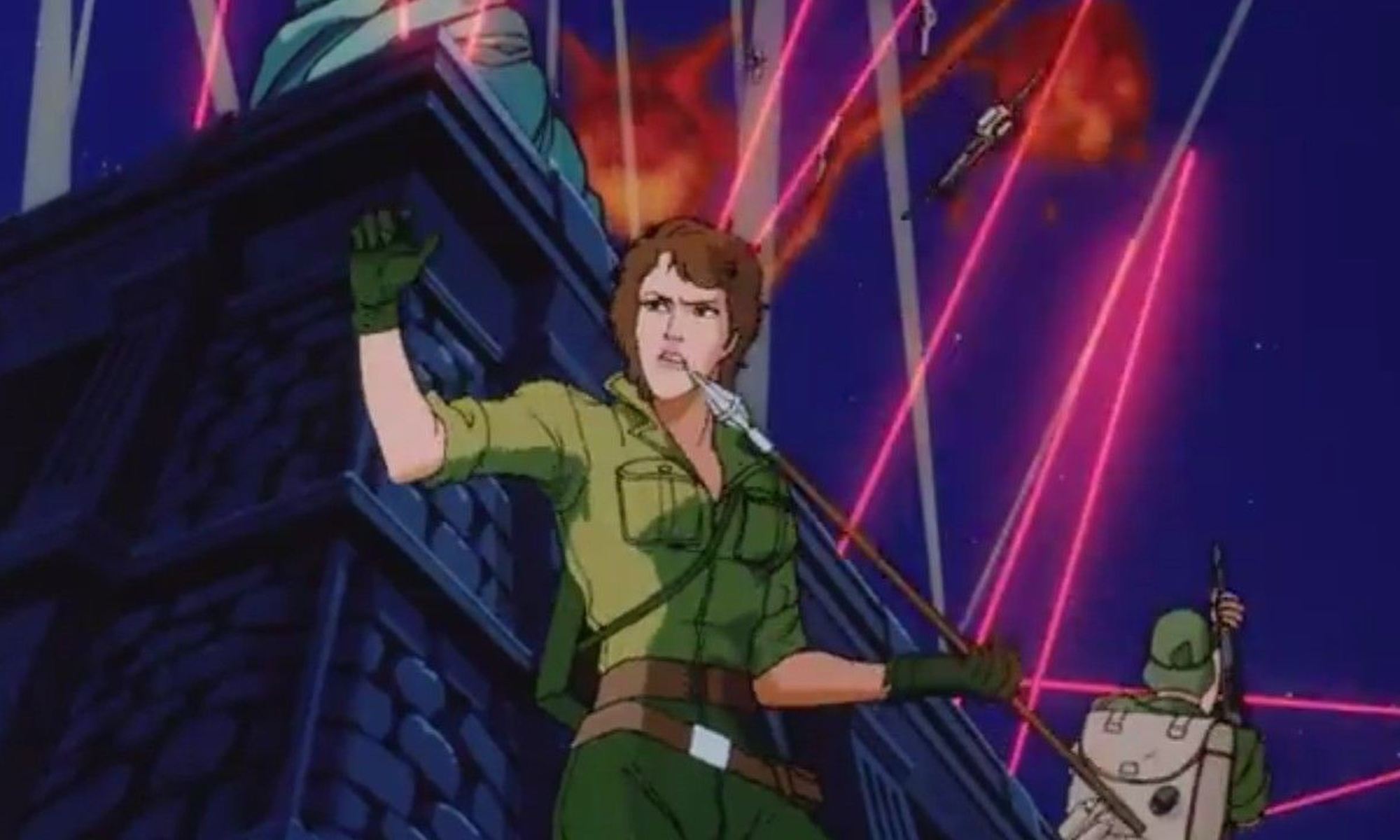
Tesla’s Last Invention: G.I. Joe

Nikola Tesla, nearing the end of his life in 1943, had one last vision: a world freed from the grip of shadowy forces. Through his experiments, he had glimpsed the rise of a diabolical secret society, the Bavarian Illuminati, whose machinations would span centuries. Tesla knew he wouldn’t live to see their plans unfold, but he could leave behind a guardian.

G.I. Joe was his answer—a man rebuilt. Tesla had saved a mortally wounded Yugoslavian soldier, embedding him with cutting-edge cybernetics and a photographic brain chip. Joe’s mind became a sponge for data, able to absorb and recall vast amounts of information instantly. His military expertise, honed during the Yugoslavian Civil War, combined with Tesla’s innovations to create a weapon against the Illuminati’s psychological and physical warfare.

Tesla’s final instruction to Joe was clear: “Protect the voices that can inspire humanity.”


It was 2001, and Joe’s latest mission had brought him to London. The Illuminati had set their sights on the Tomb Raider movie production. Nelly Furtado and Bono, both contributing to the film’s soundtrack, were at the center of the Illuminati’s scheme. Their art and activism threatened to galvanize a generation into questioning authority—a risk the society couldn’t afford.

Joe arrived on set, his presence unassuming but his senses on high alert. His neural chip processed every detail: the layout of the studio, the placement of security cameras, and the faces of the cast and crew. He noticed Bono laughing with Angelina Jolie, his energy infectious despite the weight of his activism. Nelly Furtado was rehearsing nearby, her voice filling the air with hope.


The Illuminati’s attack came swiftly. Disguised as stagehands, their operatives planted explosives around the set. Joe intercepted the plot moments before detonation, his photographic memory allowing him to identify and disarm the devices in record time. He fought off the attackers with precision, his combat training and enhancements making him a force of nature.

But the Illuminati were relentless. Their next target was Bono, who had left the set for a bike ride through London’s streets. Joe pursued him, but the Illuminati had planned the ambush well. A black SUV forced Bono into a narrow alley, where a hidden tripwire sent him crashing to the ground. Joe arrived seconds too late to prevent the accident. Bono lay on the pavement, his skull fractured and bones broken.

Joe acted quickly, using his advanced medical protocols to stabilize Bono. As he worked, Bono, barely conscious, whispered, “I need to finish… Jubilee 2000… debt relief…”

“You will,” Joe promised, his voice steady. “I’ll make sure of it.”


Bono’s recovery was slow but steady, thanks to Joe’s vigilance. Meanwhile, Joe continued to protect Nelly Furtado and the Tomb Raider cast, thwarting further Illuminati plots. The film’s release became a cultural milestone, its themes of resilience and discovery resonating with audiences worldwide. Bono’s Jubilee 2000 campaign gained momentum, leading to historic agreements on debt relief for impoverished nations.

Joe, however, remained in the shadows, his mission never-ending. Tesla’s invention had failed to prevent every tragedy, but it had preserved hope—a fragile but powerful force against the Illuminati’s darkness.

As Joe watched Bono take the stage at a charity concert, his voice rallying millions, he allowed himself a moment of reflection. Tesla’s words echoed in his mind: “Protect the voices that can inspire humanity.”

And Joe knew his work was far from done.

Translate »