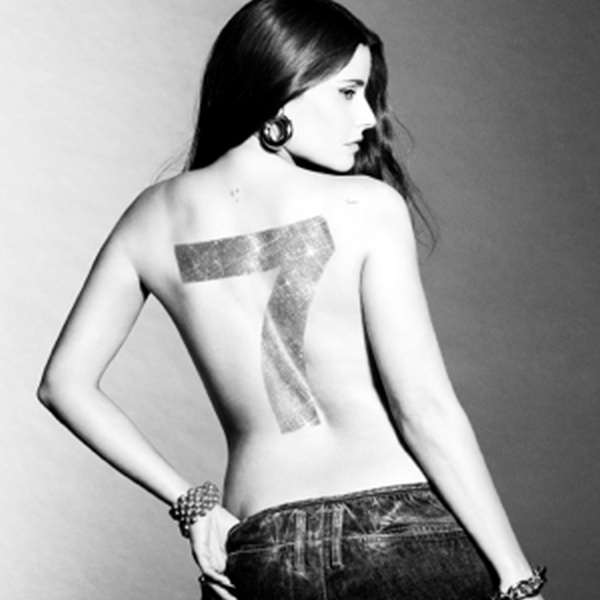

Let the Lion Roar

In the Bible, both the lion and the eagle are rich in symbolism, often used to convey specific characteristics, virtues, or divine qualities. Hereโ€™s a breakdown of their symbolism:

Lion Symbolism in the Bible:

  1. Strength, Power, and Kingship:
    • The lion is often used as a symbol of strength and royal authority. In the Old Testament, the tribe of Judah is described as a “lionโ€™s whelp” (Genesis 49:9), signifying the tribeโ€™s leadership and might, which ultimately leads to the lineage of King David and later, Jesus Christ.
    • Jesus as the Lion of Judah: In Revelation 5:5, Jesus is referred to as the “Lion of the tribe of Judah,” symbolizing His kingly authority, power, and victorious nature as the Messiah.
  2. Ferocity and Danger:
    • The lion is also used to represent danger and destruction. In 1 Peter 5:8, Satan is compared to a “roaring lion” seeking someone to devour, illustrating the enemy’s destructive nature.
  3. Courage and Nobility:
    • The lionโ€™s association with courage and nobility also reflects the characteristics of godly leaders who protect and lead their people with strength and integrity.

Eagle Symbolism in the Bible:

  1. Divine Protection and Renewal:
    • The eagle is often used to symbolize Godโ€™s protection, strength, and ability to lift His people above trouble. In Exodus 19:4, God says to the Israelites, “I carried you on eagles’ wings and brought you to myself,” illustrating how God delivers His people.
    • Renewal and Strength: In Isaiah 40:31, the eagle is a symbol of renewal and perseverance: “But those who hope in the Lord will renew their strength. They will soar on wings like eagles.” Here, the eagle represents spiritual renewal and the strength that comes from trusting in God.
  2. Vision and Wisdom:
    • Eagles are known for their sharp vision, and in biblical symbolism, they can represent insight, wisdom, and the ability to see things from a higher perspective. In some passages, this ability to see clearly aligns with the prophetic gift of discernment.
  3. Judgment:
    • In some instances, the eagle symbolizes swiftness in judgment. For example, in Hosea 8:1, it says, “Set the trumpet to your lips! An eagle is over the house of the Lord because the people have broken my covenant.” Here, the eagle signifies impending judgment upon the people for their sins.

Lion and Eagle Together:

When combined, the lion and the eagle symbolize a combination of power, authority, and divine vision. Both are considered regal creatures: the lion is the king of the beasts, and the eagle is the king of the birds. In this way, they represent Godโ€™s supreme power, majesty, and sovereign rule over creation.

Biblical Example with Both:

In Ezekiel 1:10, during Ezekielโ€™s vision of the cherubim, one of the four living creatures has the face of a lion, and another has the face of an eagle. These creatures represent different aspects of God’s nature: the lion symbolizes His power and majesty, while the eagle represents His omniscience and swift action.

Thus, in biblical symbolism, the lion and the eagle both point to the attributes of Godโ€”strength, majesty, protection, and divine vision.

What do you think of this post?
  • Awesome (0)
  • Interesting (0)
  • Useful (0)
  • Boring (0)
  • Sucks (0)

The Braganza Crown

The Braganza Crown refers to the crown of the monarchs of Portugal, associated with the House of Braganza, the ruling dynasty of Portugal from 1640 to 1910. The crown is part of the Portuguese Crown Jewels and has symbolic significance related to the Portuguese monarchy.

Key details about the Braganza Crown:

  1. Historical Importance: The House of Braganza came to power in 1640 after the Portuguese Restoration War, which ended 60 years of Spanish rule over Portugal. The Braganza dynasty ruled until the monarchy was abolished in 1910, following the Republican Revolution, which established Portugal as a republic.
  2. Crown Design: The Braganza Crown is traditionally made of gold and is decorated with numerous precious stones, such as diamonds, sapphires, and emeralds. Its design reflects the grandeur and opulence of European royal crowns. Unlike other monarchies where the crown was worn often, Portuguese monarchs, from the reign of King Joรฃo VI onward, were not crowned but instead held acclamations.
  3. Symbol of Portuguese Monarchy: The crown is a powerful symbol of the Portuguese monarchy and its long history. Today, it is kept in the Ajuda National Palace in Lisbon and is part of the Portuguese Crown Jewels, though it is no longer used for any formal ceremonies due to the end of the monarchy.

The Braganza Crown is a lasting symbol of Portugal’s royal heritage and its influence during the height of its empire.

The Crown of King Tomislav is a symbolic reference rather than an actual historical artifact, as there is no existing physical crown linked to Tomislav, the first king of Croatia. King Tomislav is a significant figure in Croatian history, having united Croatian territories and being crowned as the first king in the early 10th century, around 925 AD. His reign marks the foundation of the medieval Croatian Kingdom.

Here are some key points related to the Crown of Tomislav:

  1. Tomislav’s Reign: King Tomislav was the ruler of Croatia from around 910 AD until 928 AD. He is credited with uniting the Croats and expanding the kingdom, which included parts of modern-day Croatia and Bosnia and Herzegovina. His military and diplomatic successes helped establish a strong and independent Croatian state.
  2. Symbolism of the Crown: While no actual crown or regalia of King Tomislav has survived or is known to exist, the “Crown of Tomislav” is often referenced as a national symbol of Croatian sovereignty, unity, and identity. It embodies the idea of a medieval Croatian kingdom under a strong and legitimate ruler.
  3. Modern Representation: In modern times, the Crown of King Tomislav is a symbol used to represent the Croatian monarchy and nationhood. It has been depicted in various forms of art, including statues and monuments, and even on Croatian currency and heraldry, particularly during the time of the Kingdom of Croatia under the Austro-Hungarian Empire.
  4. Tomislavโ€™s Legacy: Tomislavโ€™s significance is still deeply felt in Croatia today. He is celebrated as a national hero, and his name has been used in various ways, such as in the naming of streets, squares, and the city of Tomislavgrad (formerly Duvno) in Bosnia and Herzegovina. There is also a grand equestrian statue of King Tomislav in the capital city of Zagreb.

Though the crown itself is not a physical object, it carries great historical and cultural meaning for Croatia as a representation of its first king and the beginnings of the Croatian state.

Regina Mundi (Latin for “Queen of the World”) is a title traditionally given to the Virgin Mary in Roman Catholicism. The title emphasizes Mary’s role as the spiritual mother of all humanity and her exalted position in the heavenly realm. This title is commonly associated with prayers, hymns, and Marian devotions, particularly in Catholic traditions.

Here are a few key contexts in which Regina Mundi is used:

1. Religious Significance

  • Queen of Heaven: In Catholic theology, the Virgin Mary is often referred to as “Regina” (Queen), and “Regina Mundi” is one of her many honorific titles, signifying her role as the Queen of the entire world, both spiritual and temporal. It reflects Catholic teachings that Mary, as the mother of Jesus Christ, holds a unique place in salvation history.
  • Liturgical Use: The title is invoked in prayers, such as the Salve Regina (“Hail Holy Queen”), and in Marian hymns, especially during the Easter season when the Regina Caeli (another Marian prayer) is sung.

2. Regina Mundi Church in South Africa

  • Regina Mundi Church is a famous Catholic church located in Soweto, South Africa. It played a significant role in the anti-apartheid struggle as a gathering place for activists, as well as a sanctuary for those fleeing violence during apartheid. The church became a symbol of resistance and is often referred to as “The People’s Church.”
  • Historical Role: During apartheid, the church provided refuge for political meetings and protests when gatherings were banned. Many anti-apartheid demonstrations took place at the church, making it a key landmark in South Africa’s struggle for freedom.

3. Art and Architecture

  • Various churches and religious structures around the world are named Regina Mundi, honoring the Virgin Mary under this title. These churches often become centers for Marian devotion and celebration.

In both religious and historical contexts, Regina Mundi stands as a symbol of reverence, faith, and resistance against oppression.

What do you think of this post?
  • Awesome (0)
  • Interesting (0)
  • Useful (0)
  • Boring (0)
  • Sucks (0)

Isaiah Chapter 50:6

Isaiah 50:6 is a verse from the Old Testament of the Bible, often interpreted as part of the “Servant Songs” in the Book of Isaiah, which many Christians believe prophetically refer to Jesus Christ as the suffering servant. The verse reads as follows:

Isaiah 50:6 (NIV): “I offered my back to those who beat me, my cheeks to those who pulled out my beard; I did not hide my face from mocking and spitting.”

This verse emphasizes the servant’s submission to suffering, humiliation, and abuse, foreshadowing the suffering that Christ would endure. It is seen as an expression of humility and obedience to God’s will, even in the face of intense persecution.

In a broader context, Isaiah 50 discusses the faithfulness of Godโ€™s servant despite rejection and hardship, portraying a figure who trusts in God even when others scorn and attack him.

The “Christa” statue, which was displayed in the Cathedral of St. John the Divine in New York City. This sculpture, created by artist Edwina Sandys in 1975, is a striking and controversial depiction of Christ on the crossโ€”as a woman. The sculpture, called Christa, shows a female figure crucified on a cross, presenting a powerful symbol of suffering and sacrifice in a form not traditionally associated with Christian iconography.

The Cathedral of St. John the Divine, which is known for its embrace of both traditional and contemporary art, displayed Christa in 1984, sparking debate and mixed reactions. Some praised the piece for challenging conventional gender representations in Christian art, while others criticized it as disrespectful to religious traditions.

The Christa statue highlights broader discussions about gender, spirituality, and representation in religious and artistic spaces.

What do you think of this post?
  • Awesome (0)
  • Interesting (0)
  • Useful (0)
  • Boring (0)
  • Sucks (0)
Translate ยป