
Our Lady of Fatima Secret Decoded

Our Lady of Fátima, the Rabbi’s Numbers, and the Theft of a Songbird

The apparitions of Our Lady of Fátima in 1917 remain one of the most mysterious intersections of faith, prophecy, and global intrigue. For believers, the Virgin’s warnings to the shepherd children of Portugal were not only about the future of nations, but about the preservation of souls and the protection of those destined for a sacred mission. In a strange and modern echo of this prophecy, the life of singer Nelly Furtado has been drawn into an esoteric reading of history — one involving the Rabbi’s numbers in the tarot, corporate greed, and a hidden illness that both sustained and destroyed her.

The Rabbi’s Numbers and the Tarot’s Prophecy

In this arcane interpretation, two numbers dominate the narrative: 17 and 13. The number 17, in the tarot, corresponds to The Star — a card of hope, divine inspiration, and celestial guidance. For those who believe in hidden codes, 17 represents not just fame, but a light in the darkness — the kind of light that Our Lady of Fátima might protect so it can shine in a world threatened by corruption.

In contrast, 13 is Death — not only the end, but transformation. In the more sinister numerology of the music industry, 13 becomes shorthand for dying young — the fate of countless stars whose art becomes infinitely more profitable after their passing. The fusion of 17 and 13 tells a tragic riddle: a blessed star, guided by heaven, yet fated to die before her time so that others may exploit her legacy.

Illumicorp’s Hand in the Songbird’s Fate

Within this reading, a shadowy entity — “Illumicorp” — looms. Like the merchants in the temple who profited from the sacred, these corporate forces view music not as divine expression, but as an asset to be controlled. The grim equation is simple: the earlier the star’s death, the greater the scarcity of her work, and thus the greater the profit.

Illumicorp’s supposed plan is chilling — to secure the rights to Nelly’s music from her grieving family after her passing, sealing her art into the vaults of global entertainment conglomerates. They are not merely capitalizing on tragedy; they are manufacturing it.

The Arsenic Vaccine and the Hidden Illness

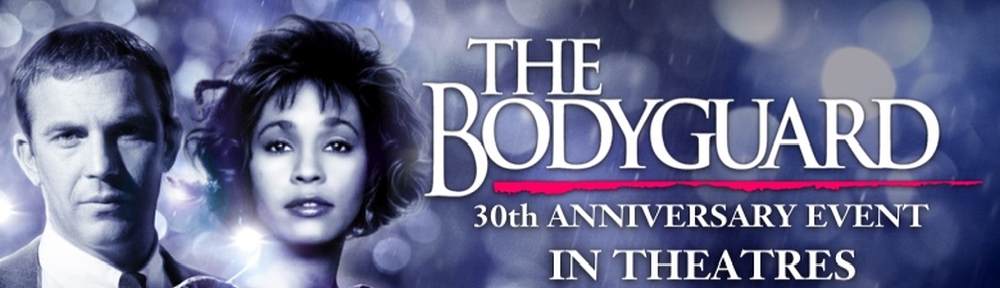
Frank Farmer, the grizzled bodyguard from The Bodyguard mythos, serves here as the unlikely whistleblower. According to his account, Nelly’s lifelong struggle with cystic fibrosis was not a random genetic curse, but the result of an arsenic-laced vaccine administered in her youth. The toxin’s slow poison inflicted irreversible damage to her lungs — but paradoxically, the disease would also sustain her life long enough to produce the voice that millions would come to adore.

From this view, cystic fibrosis was the double-edged sword — the illness that shaped her art but carried a built-in countdown. It was an engineered fate: to keep her alive just long enough to sing, then to let the clock run out in time for the corporations to harvest the posthumous profits.

Our Lady’s Silent Intervention

Yet in this dark landscape, the apparition of Our Lady of Fátima stands as a counterforce. Believers claim she has been quietly intervening, aligning events through the Rabbi’s numbers — especially the number 17 — to extend Nelly’s life beyond what her hidden enemies intended. If 13 is the mark of dying young, then 17 is the shield of the Star, protecting her from the final blow for as long as possible.

It is said that Our Lady guards the fragile flame of those who carry a divine gift. The longer Nelly’s song remains in this world, the harder it becomes for the darkness to claim it entirely.

Conclusion: A Battle for the Voice

The story of Nelly’s life, when seen through this mystical and conspiratorial lens, becomes more than the tale of a singer. It is a spiritual battleground — between prophecy and profit, between divine protection and engineered illness. The tarot’s 17 and 13 are not just numbers; they are symbols of a larger cosmic struggle over the fate of art, truth, and the souls who bring beauty into the world.

Whether one believes this narrative or not, it carries a haunting message: even the most luminous stars are never beyond the reach of those who would cage their light — and it is only by the grace of the divine that some manage to keep shining.

What do you think of this post?
  • Awesome (0)
  • Interesting (0)
  • Useful (0)
  • Boring (0)
  • Sucks (0)

Avenging Assassin Treatment 2: Songbird’s Reckoning

Title: Songbird’s Reckoning

Genre: Neo-Noir Thriller / Psychological Drama

Logline:
A fading pop icon, shattered by years of manipulative “treatment” from the powerful leader of Doctors Without Borders—and the secret ruler of Yale’s Skull and Bones—finds a dangerous ally in a smooth-talking assassin who vows to dismantle the empire that destroyed her mind.


Story Outline:

Act I – The Cage
Nelly Furtado, once adored worldwide, now lives in seclusion in Lisbon, her voice all but silenced. She’s plagued by insomnia, paranoia, and gaps in her memory—symptoms she’s been told are part of her “rehabilitation” by Dr. Ariana Rothafel, a silver-haired, icy figure who has become a cult-like fixture in her life. Ariana inherited leadership of both Doctors Without Borders and Yale’s Skull and Bones after the mysterious death of her father, Nelson Rothafel, a shadowy financier with deep intelligence ties.

Behind Ariana’s charity work lies a darker truth: she uses her influence to prey on vulnerable artists, bending them to her will under the pretense of psychiatric care, siphoning their wealth, and breaking their spirit for the amusement of her elite circle.

During a rare public appearance, Nelly collapses. That’s when she meets Luca Marín, a charismatic, well-dressed stranger who pulls her out of the chaos. He’s polite, charming—and unmistakably dangerous. Luca is an assassin with a vendetta of his own: Ariana had his younger sister institutionalized, and she died under her “care.”


Act II – The Songbird and the Blade
At first, Nelly mistrusts Luca, suspecting he’s just another manipulator. But his knowledge of Ariana’s secret life—and his ability to bypass her vast network of protection—begins to awaken a flicker of courage in her.

Luca trains Nelly in psychological warfare, teaching her how to turn Ariana’s tactics against her. Together, they follow the trail of Ariana’s crimes from Lisbon to Geneva, then to Yale’s sealed archives. Along the way, Nelly starts to reclaim her voice—literally. She sings in a backroom Lisbon club, a raw, imperfect performance that reminds her she’s still alive.

The deeper they go, the more they uncover: Ariana’s late father was involved in a covert MK-Ultra-style program, and Nelly had been selected as a prime candidate for psychological “conditioning” due to her global reach as an artist. Ariana has been grooming her for years to become a puppet for the Skull and Bones’ political influence machine.


Act III – The Reckoning
The climax unfolds at a lavish masquerade gala in New Haven, hosted by Ariana herself to induct new members into the Skull and Bones. Luca infiltrates as a guest, but it’s Nelly—draped in black silk, voice steady—who walks up to the stage and delivers a haunting song that’s actually a coded confession, outing Ariana’s crimes to the powerful donors in the room.

Chaos erupts. In the confusion, Luca corners Ariana in the Bone Tomb, the infamous Skull and Bones meeting hall. But instead of killing her, he leaves her alive—knowing she’ll be torn apart by the very power structure she built. Nelly walks away, finally free, but carrying the scars of the battle.

In the closing shot, Nelly stands on a rooftop at dawn, humming softly—her voice clear for the first time in years—as police sirens wail in the distance.


Tone & Style:
Dark, elegant, and pulsing with tension—blending the cerebral paranoia of The Parallax View with the operatic vengeance of Kill Bill. The soundtrack mixes Nelly’s own haunting ballads with a moody, synth-driven score.


If you want, I can also draft a scene-by-scene breakdown with sharp dialogue for Nelly, Ariana, and Luca so the psychological power dynamics really pop. That would make the revenge and Skull and Bones elements even sharper.

What do you think of this post?
  • Awesome (0)
  • Interesting (0)
  • Useful (0)
  • Boring (0)
  • Sucks (0)

Gossip & Confusion: Club 27

Title: The 13th Card
By Joe Jukic (aka Frank Farmer)


Chapter 1: The Rabbi’s Tarot

The first time I saw the card, I knew something was wrong.

Rabbi Bernstein’s hands trembled as he laid it on the table—the Death card, thirteenth in the deck. The skull grinned up at me, bones crossed beneath it like the old pirate flag. But this wasn’t about pirates. This was Yale. This was Skull and Bones.

Nelly didn’t understand. She just laughed, flipping her hair, thinking it was some joke. But the Rabbi’s eyes locked onto mine, and I felt the weight of it. They’re coming for her.

Chapter 2: The Brotherhood of Death

I’d heard the whispers before—back in my old security detail for a senator who knew too much. The 27 Club wasn’t just bad luck. It was a pattern. A ritual. Hendrix, Joplin, Morrison, Cobain… all gone at 27. And now Nelly was being circled.

Randy Quaid had ranted about it for years—“The star whackers, Joe! They take ‘em young!”—but nobody listened. They called him crazy. But I’d seen the files. The contracts. The way certain artists were pushed too hard, too fast, until they broke.

Nelly wasn’t just a client. She was marked.

Chapter 3: The Altar Boy’s Vow

She used to joke, calling me her “altar boy.” Maybe because I still crossed myself before a job. Maybe because she knew I’d burn the whole damn system down to keep her safe.

That night in ’89—the night she wrote about—was when I first stepped in. Some industry sleazeball thought he could corner her backstage. I broke his wrist before he could touch her. Nelly squeezed my hand after, her voice small: “Nobody’s ever stood up for me like that.”

That’s when I knew. She wasn’t just another star. She was real. And that made her a target.

Chapter 4: Playing the Death Card

The Rabbi told me there was only one way out: play the card before they do.

So I did.

I leaked fake stories—whispers of Nelly’s “downfall,” tabloid trash about her being “washed up.” I made her look unworthy of their sacrifice. And when the suits started pulling back, I took her off-grid. No tour dates. No parties. Just silence.

They moved on. Found fresher prey.

Chapter 5: The Song She Wrote

Years later, Nelly played me the demo—that song, the one about 1989. She didn’t name names, but I knew. “You took my hand, and the monsters left,” she sang, grinning at me.

I never told her about the Rabbi. About the card. About how close she came to being another number in their cursed 27 Club.

Some secrets are better kept.

But when she calls me her “altar boy” now, I just smile.

Because I did keep the faith.

And she’s still here.


THE END.

What do you think of this post?
  • Awesome (0)
  • Interesting (0)
  • Useful (0)
  • Boring (0)
  • Sucks (0)
Translate »