

Creative Writing Treatment 17

Movie Treatment: “The Prophets of Fatima”

Written by: Nelly Furtado and Joe Jukic

Genre: Historical Drama / Mystery / Thriller

Logline: In 1917, three shepherd children in Fatima, Portugal, experience divine visions that foretell the future, but their revelations are met with skepticism, persecution, and betrayal. As they struggle against the forces of the occult and the Illuminati, the children face a tragic fate, with the shadows of the Spanish Flu and political intrigue looming over their every move. Their story, filled with divine prophecy, dark conspiracies, and ultimate sacrifice, unfolds through the lens of Psalm 17—”A Prayer Against Persecutors.”


ACT 1:

The film opens in the quiet village of Fatima, Portugal, where three young shepherd children—Lucia dos Santos, Jacinta Marto, and Francisco Marto—experience a series of mystical visions of the Virgin Mary. The children, naive and innocent, begin to speak of these apparitions to their families and the local clergy. However, their revelations are met with skepticism and disbelief. The Catholic Church, wary of the implications of such powerful visions, is slow to embrace the children’s message, while local authorities begin to grow increasingly suspicious of their claims.

The year is 1917, and Europe is embroiled in the chaos of World War I. The Spanish Flu is sweeping across the globe, claiming millions of lives, and political upheaval is brewing. The Balfour Declaration is signed, signaling the beginning of the Zionist movement’s influence in the Middle East. Meanwhile, the Rothschilds and other elite figures begin to assert their power over global affairs, and the Illuminati’s influence grows in the shadows.

The children’s visions continue, with the Virgin Mary urging them to spread a message of peace and repentance. She warns of future wars and the rise of a “great persecution” against the faithful. The children are told that they will suffer for their message, and Jacinta and Francisco, in particular, are marked by a divine purpose that will lead to their ultimate sacrifice.

ACT 2:

The children’s message begins to attract attention, both positive and negative. As their fame grows, so does the scrutiny from both religious authorities and political figures. The Illuminati, seeing the potential for the children’s revelations to disrupt their plans for global control, begin to take action. They see the children as a threat to their vision of a world dominated by wealth, power, and secrecy.

Jacinta and Francisco are taken to Rockefeller-run occult hospitals, under the guise of receiving medical care for the Spanish Flu. In reality, they are subjected to cruel, experimental treatments designed to weaken their resolve and silence their message. Their suffering is exacerbated by the harsh conditions of the hospitals, where they are treated like mere pawns in a larger game. The children’s health deteriorates, and their visions become more intense, as they experience the full weight of their divine mission.

Meanwhile, Lucia, the eldest of the three, is left to bear the burden of their message. She faces intense pressure from both the Church and the government to recant her claims, but she remains steadfast in her belief. The tension between Lucia and the authorities grows, as they attempt to manipulate her into silence.

The film explores the tension between faith and politics, as the children’s divine revelations threaten the established order. The Illuminati, working behind the scenes, orchestrate a plan to eliminate Francisco, whom they believe is destined to become either a messiah or a pope. His death, they believe, will prevent the fulfillment of the prophecy and ensure their control over the future.

ACT 3:

The climax of the film occurs as Jacinta and Francisco’s health rapidly declines, and they are eventually claimed by the very disease that ravaged the world. The children’s deaths are portrayed as tragic yet inevitable, the result of a combination of iatrogenic factors—their mistreatment in the occult hospitals and the deadly Spanish Flu. Their passing is a moment of profound sorrow, but also of triumph, as their message of peace and repentance lives on through Lucia.

Lucia, now an adult, continues to spread the message of Fatima, but she is constantly pursued by those who wish to silence her. The Illuminati’s grip on the world grows stronger, but Lucia remains defiant, knowing that the truth will eventually prevail. The film ends with a haunting final scene, in which Lucia looks up at the sky, knowing that the prophecy of Fatima is still unfolding.

The closing shot lingers on the three children, now canonized as saints, their legacy immortalized in the hearts of the faithful. The message of Fatima—of peace, repentance, and the struggle against persecution—echoes through the ages, a testament to the power of divine truth in a world dominated by darkness and deceit.


Themes:

  • Persecution and Sacrifice: The children’s story is one of unwavering faith in the face of persecution. Their willingness to suffer for their beliefs is contrasted with the greed and manipulation of the political and religious elites who seek to control them.
  • Divine Prophecy vs. Human Power: The film explores the tension between the divine revelations given to the children and the political and financial forces that seek to suppress them. The Illuminati, representing the forces of greed and control, work to eliminate the children’s message, but the divine truth endures.
  • The Spanish Flu and Iatrogenic Deaths: The film highlights the devastating impact of the Spanish Flu and the mistreatment of the children in the Rockefeller-run occult hospitals. Their deaths are portrayed as a tragic result of human greed and indifference to suffering.
  • Psalm 17 – Prayer Against Persecutors: The film draws heavily on Psalm 17, which speaks of divine protection against persecutors. The children’s journey is framed as a metaphor for this prayer, as they struggle against those who seek to silence them. The message of the psalm—that God will deliver the righteous from their enemies—is echoed throughout the story.
  • The Number 13 and the Illuminati: The children’s connection to the number 13, which is often associated with the Illuminati, serves as a symbol of their divine mission and the forces working against them. The film suggests that the children were marked by destiny to challenge the Illuminati’s grip on the world.

Final Notes:

Nelly Furtado and Joe Jukic’s treatment for “The Prophets of Fatima” blends historical drama with mystery and thriller elements, creating a powerful narrative about the clash between divine revelation and human power. The film’s themes of persecution, sacrifice, and the struggle for truth resonate with contemporary issues of control, corruption, and the fight for spiritual freedom. Through the lens of the three children’s story, the film explores the timeless battle between good and evil, and the enduring power of faith in the face of overwhelming adversity.
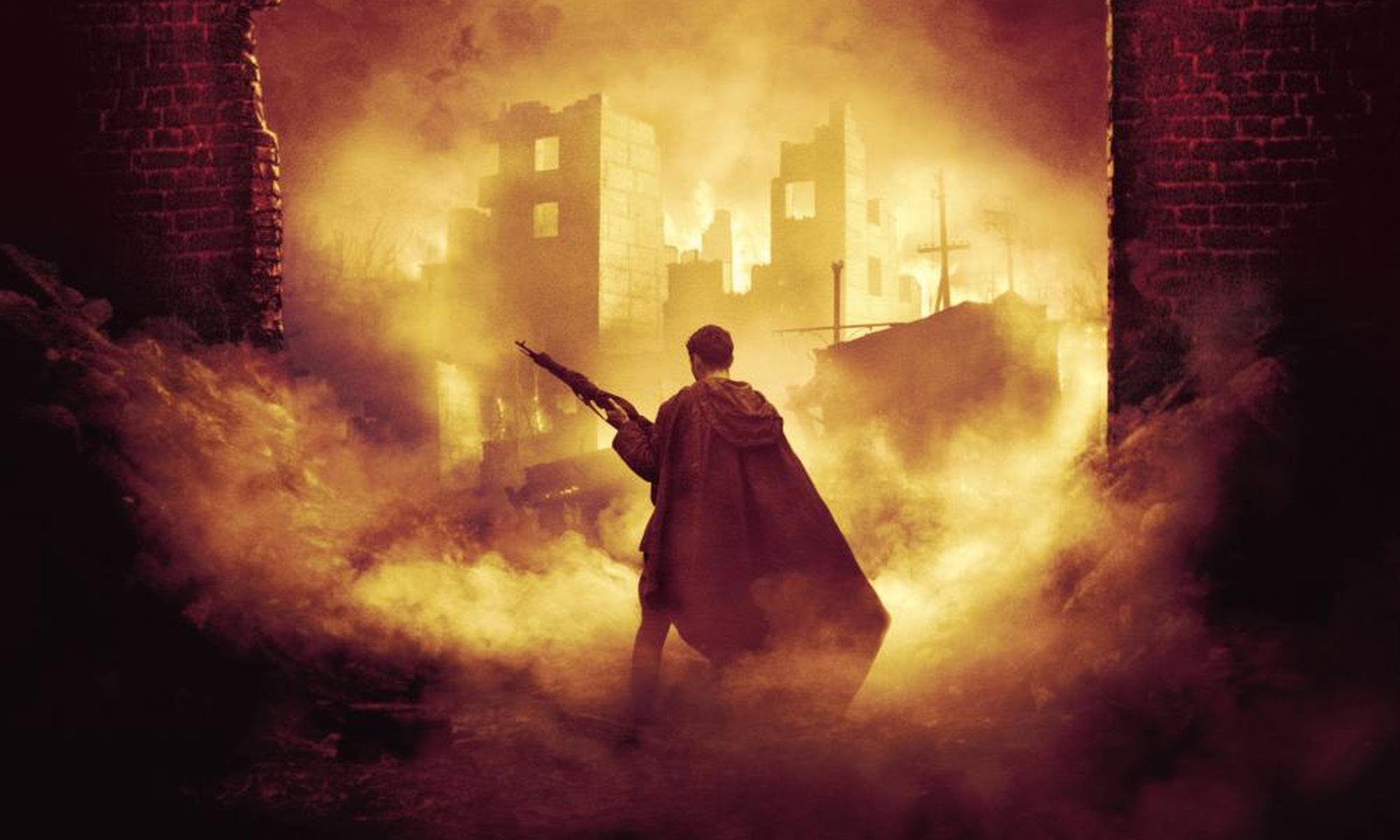
A Dinner Among Heroes

The cozy London restaurant hummed with quiet sophistication, its dim lighting casting warm shadows over polished oak tables. At a secluded corner table, Nelly Furtado and Joe Jukic sat across from Jude Law and Sadie Frost, their conversation weaving between laughter and thoughtful reflection. A soft rain pattered against the windows, adding a rhythmic undertone to the evening.

Nelly, her vibrant personality lighting up the room, gestured animatedly with her wine glass. “So, Jude,” she began, “Enemy at the Gates—what a film. Vasily Zaitsev was such a fascinating character. A hero, but also so human. What drew you to that role?”

Jude leaned back, his piercing blue eyes thoughtful. “It was the complexity, really. Zaitsev wasn’t just a sharpshooter; he was a symbol. A man elevated by circumstance into something larger than himself. It made me think about the nature of heroes—how they’re often created by the needs of the people rather than their own desires.”

Sadie, ever the grounding presence, added, “And the weight of that. Heroes carry more than their own burdens; they carry the hopes of everyone who believes in them.”

Joe, who had been quiet until now, swirled his drink and spoke with a quiet intensity. “There are no heroes in war,” he said. “Just survivors. People do what they have to do, and others call them heroes to justify the horror.”

The table fell silent for a moment, the weight of Joe’s words settling over them. Nelly reached over, placing a comforting hand on his. “But surely,” she said softly, “there’s value in what people believe. Heroes inspire. They give us something to strive for.”

Jude nodded, his expression thoughtful. “That’s true. But heroes can also be dangerous. They can blind us to the realities of what they represent. Take Psalm 127:5, for example: ‘Blessed is the man whose quiver is full of them. They will not be put to shame when they contend with their enemies at the gate.’ It’s a call to strength, to vigilance. But it also reminds us that there are always enemies—always gates to defend. It’s an endless cycle.”

Sadie tilted her head, studying Jude. “You’ve been thinking about this a lot, haven’t you?”

He smiled faintly. “The world we live in now… it feels like there are invisible enemies at the gates. Forces pulling strings behind the scenes, shaping our lives in ways we can’t see. Joe,” he said, turning to their guest, “you’ve done something remarkable by exposing some of those shadows. You’ve made the invisible visible. That’s heroic in its own way.”

Joe shook his head, his expression grim. “I’m no hero. I’ve just shone a light in dark places. But the shadows are still there, and they fight back. People like me don’t win wars; we just make the battle lines clearer.”

Nelly, sensing the heaviness of the moment, leaned forward. “Joe, tell them about what you’ve learned. From psywarrior.com, from your own work. The Virgin Mary psyop. It’s not just about making battle lines clearer—it’s about finding peace.”

Joe hesitated, then nodded. “Psywarrior.com taught me a lot about the power of psychological operations. How belief systems can be weaponized—or used to heal. It’s not just about manipulation; it’s about understanding the human mind and spirit. That’s what inspired the Virgin Mary psyop. I thought, if we could create a narrative so powerful, so rooted in love and compassion, it might cut through the noise of conflict. Give people something to rally around that isn’t about hate or division.”

Sadie’s eyes widened. “You’re saying you’re trying to create peace through a psyop?”

“Not just peace,” Joe clarified. “Hope. Connection. The Virgin Mary is a universal figure—across cultures, religions, and even those who don’t believe in anything divine. She represents something pure. I wanted to use that image, that story, to plant seeds of unity. It’s not perfect, and it might not work. But it’s worth trying.”

Jude leaned forward, his gaze intense. “That’s… bold. Dangerous, even. But maybe that’s what makes it heroic. It’s not about the tools you use; it’s about the intent behind them.”

Nelly smiled, her voice warm. “See, Joe? You might not think of yourself as a hero, but you’re trying to do something extraordinary. And that’s what the world needs right now.”

The table erupted in laughter, the tension easing. Sadie raised her glass. “To heroes, reluctant or otherwise.”

“To heroes,” they echoed, clinking glasses.

Outside, the rain continued to fall, washing the streets clean as the four of them shared stories, ideas, and dreams. In a world full of shadows, their conversation was a small light, a reminder that even amidst uncertainty, the human spirit endures.

The Revelation Dinner

The Revelation Dinner: Joe, Nelly, Taylor, and Travis

It was a cool autumn evening in Toronto, and Joe Jukic and Nelly Furtado had invited Taylor Swift and Travis Kelce over for dinner. The gathering was casual, yet the air was charged with a sense of connection and shared curiosity. Over plates of roasted salmon and kale salad, the conversation meandered from music to sports to deeper topics.

As the group settled into the cozy living room, Taylor leaned forward, her curiosity piqued. “Joe, Nelly mentioned you’ve been studying Revelation. She said you have a fascinating theory about the beast. I’d love to hear it.”

Joe glanced at Nelly, who nodded encouragingly. “Alright,” he began, “but buckle up. This might blow your mind.”


The Beast and the Russian Bear

Joe’s voice took on a storyteller’s cadence as he began. “You know Revelation 13 talks about a beast rising out of the sea, with seven heads and ten horns, and how it receives a deadly wound but then heals?”

Taylor nodded, her eyes wide with anticipation. Travis leaned back, intrigued but skeptical.

“Well,” Joe continued, “I think that beast could represent the Soviet Union—the Russian bear. Think about it: an empire that rose to immense power, suffered catastrophic wounds, but kept coming back stronger.”

Travis raised an eyebrow. “Okay, but what makes you think it’s the Soviet Union?”

Joe gestured for emphasis. “History, my friend. Napoleon invaded Russia in 1812, killing over 200,000 Russians. It was a devastating blow, but Russia survived. Fast forward to World War II—Hitler’s invasion. The Soviet Union lost 27 million people. Twenty-seven million! Entire cities were destroyed, families wiped out. It was a wound that should have ended them.”

Taylor gasped softly. “But it didn’t.”

“Exactly,” Joe said. “Not only did they survive, but they became a global superpower during the Cold War. That’s the deadly wound that was healed. The Soviet Union didn’t just recover—it dominated.”


Nelly’s Perspective

Nelly chimed in, her voice thoughtful. “And it’s not just about the numbers. The Soviet Union’s influence was like a shadow over the world. Communism spread across continents, and people either feared it or revered it. It was almost… worshipped, in a way. Doesn’t Revelation talk about people worshipping the beast?”

Joe nodded. “It does. And even after the Soviet Union collapsed in 1991, Russia—the heart of the beast—remains a powerful force. Its influence, its legacy, it’s all still there. The beast’s wound was healed, and it’s still prowling.”


Taylor’s Revelation

Taylor sat back, her mind racing. “This is incredible. I’ve always thought of Revelation as symbolic, but this… this makes it feel so real. The idea that history could fulfill prophecy in such a way—it’s chilling and awe-inspiring.”

Travis, still processing, scratched his chin. “So, what does that mean for us? If the beast is still out there, are we living in the middle of the story?”

Joe shrugged. “Maybe. The beast could be more than just one empire. It could be a pattern—a warning about the cycles of power and destruction in human history. Empires rise, they fall, they leave scars, but they always seem to come back in some form.”


The Power of Understanding

Nelly smiled at Taylor and Travis. “The important thing is to stay aware. History isn’t just something that happened—it’s something that keeps happening. Understanding it helps us make better choices in the present.”

Taylor leaned forward, her voice soft but resolute. “I feel like this is a song waiting to happen. A story about resilience, about scars and healing, about the power and danger of empires. Maybe I’ll call it ‘The Wounded Beast.’

Travis chuckled. “And I’ll make sure it’s the first thing played in the Chiefs’ locker room.”

Joe raised his glass. “To understanding the past, so we can shape the future.”

The four clinked their glasses, their conversation a reminder of how stories—whether from ancient texts or modern history—have the power to connect, inspire, and illuminate the world around us.

Nelly Fan
Translate »