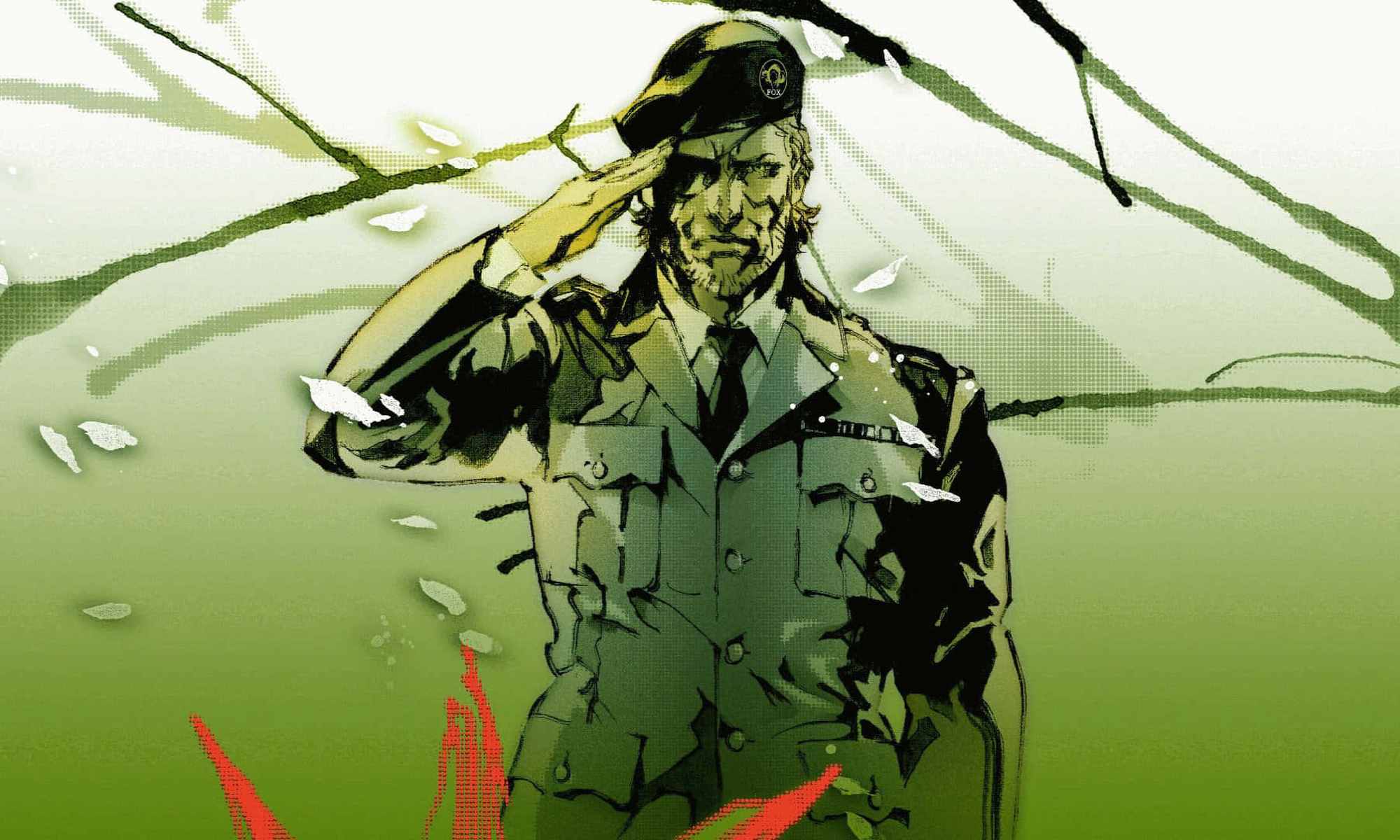
Solid Snake, ever the lone warrior against the hidden dangers of the world, makes a cryptic post on Nelly Furtado’s blog:
**”Nelly, the battlefield has changed, but the war remains the same. You’re being poisoned. Glyphosate—it’s everywhere. In your food, in the water, in the very air you breathe. The suits say it’s safe. But they said the same thing about Agent Orange. About asbestos. About leaded gasoline. Lies, all of it.
You ever hear the story of Moses and the crucified snake? The people were sick, dying from venomous bites. So God told Moses to lift a bronze serpent on a pole. Whoever saw it would live. The truth saved them.
History repeats itself. Look around. The venom is in the crops. In the bread you eat. In the wine you drink. But they don’t want you to see the snake.
Wake up, Nelly. The battlefield isn’t just warzones anymore—it’s your dinner plate. Fight back.”**
The post sits there, stark and ominous, waiting for Nelly—or whoever’s paying attention—to see the snake before it’s too late.
Solid Snake took a deep drag of his cigarette, exhaling slowly as he sat in the dimly lit motel room. The neon lights of Los Angeles flickered through the blinds, casting broken shadows across the cheap wooden table. His hands trembled slightly—whether from the years of combat, the drugs the government pumped into him, or the sheer weight of what he had uncovered, he wasn’t sure.
He had seen the horrors of war, but this was something different. This was a battlefield without bullets, without exosuits or genome soldiers. This was a war of the mind, a war fought with contracts, manipulation, and trauma-based control. And at the heart of it all were the names that no one dared to whisper too loudly—MGM, Warner Brothers, the Bronfman family, Geffen. The real puppet masters.
The industry was more than just a machine designed to print money—it was a fortress of control. They took bright-eyed dreamers and turned them into disposable commodities, forcing them into contracts that stole their freedom, their dignity, their very souls. If they resisted, they were blacklisted. If they obeyed, they were rewarded with wealth, but at a cost no sane person would pay willingly.
Snake had been in Croatia, trying to disappear, but he couldn’t ignore the distress call embedded in Nelly Furtado’s song Party. It wasn’t just music—it was a coded SOS, a cry for help disguised as a club anthem. The lyrics spoke of control, of being trapped, of the unseen forces pushing artists into submission. Nelly wasn’t just a pop star—she was a prisoner in plain sight, like so many before her. Monroe. Houston. Winehouse. The list was endless.
He had returned to America with a mission. He wasn’t alone. Vigilant Citizen and Pseudo-Occult Media had been tracking the industry’s darkest secrets for years. They had the research, the receipts, the proof of a system built on ritual humiliation and absolute control. But what good was knowledge without action?
Snake knew what needed to be done.
With a grimace, he reached into his pocket, pulling out a small metal case filled with government-issued stabilizers. They said they were for his ‘condition,’ but he knew better. The drugs kept him docile, kept him from thinking too clearly, kept him from connecting the dots too fast. He palmed a pill, considered it, then crushed it against the table. He needed his mind sharp.
The mission was simple: infiltrate the system, expose the handlers, and rescue the ones still trapped inside. The elite didn’t fear lawsuits. They didn’t fear protests. They feared the light of truth, and that’s exactly what Snake was going to shine on them.
He loaded his SOCOM pistol and grabbed his codec. This wasn’t Shadow Moses, but it was just as deadly. The enemy didn’t wear uniforms, but their power was just as insidious.
It was time to bring down Hollywood’s secret war machine.
The Prince of Persia: Reza Pahlavi and the Future of Iran By Solid Snake
History has a way of repeating itself. The fall of empires, the rise of dictators, the promises of democracy—only to be crushed by greed, power, and betrayal. But every now and then, someone gets a second chance. This is the story of Reza Pahlavi, the exiled prince of Persia, and why his return must be through the ballot box, not the throne.
The Fall of a Kingdom
In 1953, the CIA and British intelligence orchestrated Operation Ajax, toppling Iran’s democratically elected Prime Minister, Mohammad Mossadegh. His crime? Nationalizing Iran’s oil and challenging Western control over Persian resources. In his place, the U.S. reinstalled the Shah, Mohammad Reza Pahlavi, turning Iran into a puppet state for the Cold War.
For years, the Shah ruled with an iron fist—modernizing the country but silencing dissent through the brutal SAVAK secret police. The people revolted, and in 1979, the monarchy fell, replaced by the iron grip of Ayatollah Khomeini. A revolution fueled by dreams of justice only led to a new tyranny, one that has ruled for over four decades under the Supreme Leader’s theocracy.
Reza Pahlavi: A Prince Without a Throne
Reza Pahlavi, son of the last Shah, grew up in exile. While some see him as the rightful heir, monarchy has no place in modern Iran. Kings and Supreme Leaders are relics of the past. If Reza Pahlavi wants to lead Iran, he must do it the right way: through the will of the people.
The Only Path Forward: A Fair Election
Iran doesn’t need another Shah or Supreme Leader. It needs a President—a man chosen by the people, serving only for four to eight years. No divine right, no absolute power, just accountability. If Reza Pahlavi truly cares for Iran, he should run in a free and fair election, not claim a throne that should never exist again.
The Ghost of the CIA and the Future of Iran
The West has meddled in Iran’s affairs for far too long. The CIA helped overthrow Mossadegh, and decades later, Iran still suffers from that betrayal. If America wants to make amends, it won’t be through regime change but through supporting real democracy—without interference, without manipulation.
The Iranian people deserve to choose their leader. Reza Pahlavi has a chance to prove himself, not as a prince, but as a man willing to serve rather than rule. If he wins, he serves. If he loses, he steps aside. No more kings. No more dictators. Just a country that finally belongs to its people.
Final Words
I’ve fought in too many wars to believe in fairy tales. No one is coming to save Iran but the Iranian people themselves. Reza Pahlavi can be a part of that future, but only if he earns it the right way. The time of kings is over. The time of democracy begins now.