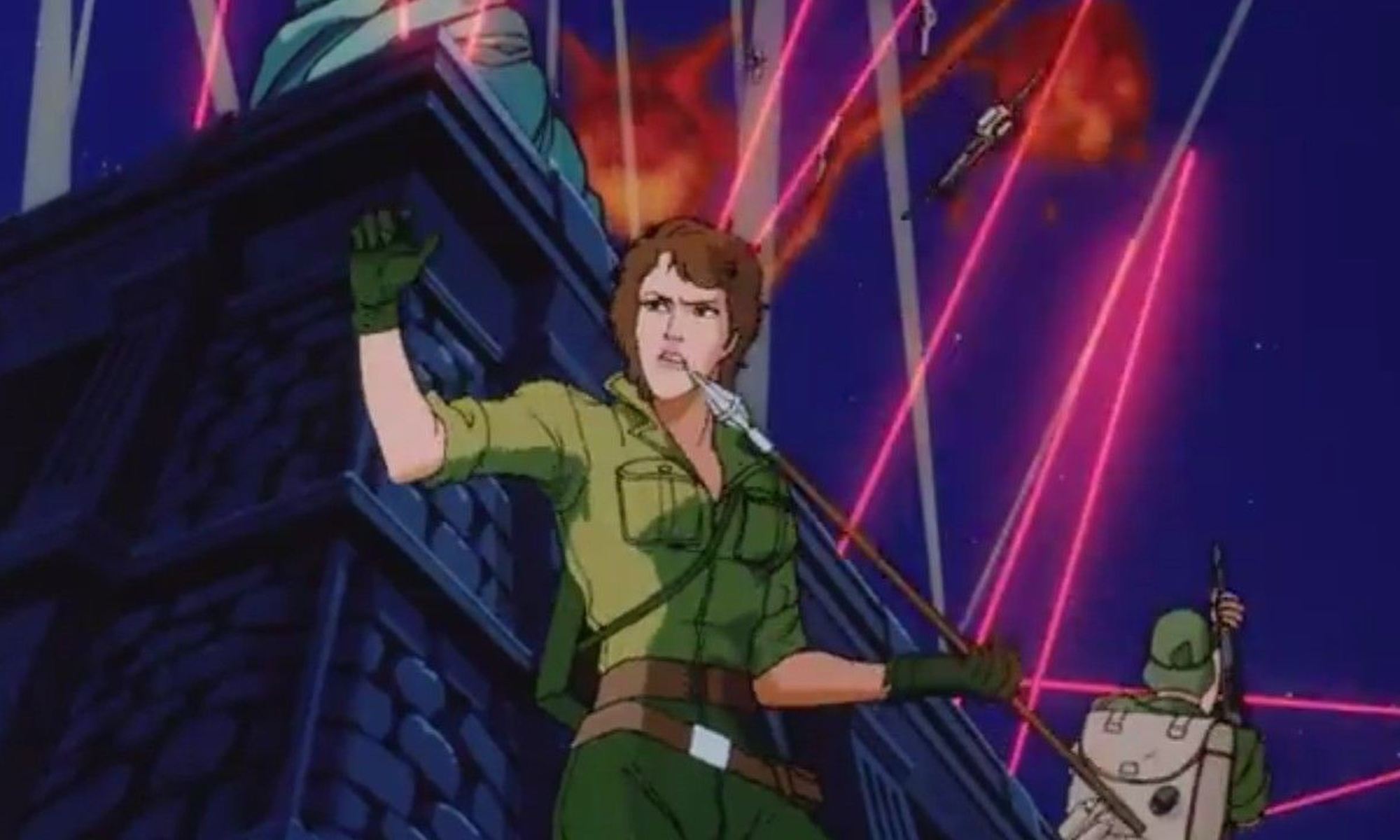
Joe leaned back against the armored Humvee, arms crossed, watching the night sky as the campfire crackled between him and Lady Jaye. The team had just wrapped up a mission, but Joe’s mind was on something bigger than Cobra—something deeper.
“You ever think about how we’re all just playin’ a rigged game?” Joe said, flicking a silver coin between his fingers. “The whole beast-mark system is built on unpayable debt. They got us chasing these devil’s federal reserve notes like rats in a maze.”
Lady Jaye smirked, sharpening her knife. “And what are we supposed to do, Joe? Barter chickens and beads?”
Joe exhaled, shaking his head. “It wasn’t always like this. What happened to free love? People used to fight for something real. Now everybody just wants that mean green. A world where love was the currency… that’s what they promised in the ’60s. But the minute they got people hooked on free love, they flipped the game—made it all about free markets instead.”
Lady Jaye stopped sharpening, looking up. “You’re saying love was just another psyop?”
Joe chuckled darkly. “Maybe. They killed the dream and sold us a new one. Same hippies who sang about peace turned into stockbrokers pushing derivatives. Now even revolution’s a business.”
Lady Jaye flipped her knife in her palm. “So what’s the move, Joe? Are we just supposed to opt out? Burn our dollars and live off the land?”
Joe stared into the fire. “Nah. We play smarter. The system only has power if we give it our faith. Maybe it’s time to make our own rules.”
Lady Jaye smirked. “Sounds like you’re talkin’ treason, Joe.”
Joe flicked the coin into the flames. “Maybe I am. Or maybe… I’m talkin’ freedom.”
The harbor was still, the faint glow of the moon reflecting on the water as Joe and Nelly Furtado sat on a weathered bench. The soft hum of Kavinsky’s Nightcall played from Joe’s phone, its haunting melody setting the tone for their intense discussion.
“You know,” Joe began, his voice steady and deliberate, “the Red Symphony isn’t just a metaphor. It’s a chilling revelation. J.F. Landowsky documented Christian Rakovsky’s interrogation, exposing how powerful elites used Communism not for equality, but as a tool of control. And it wasn’t just about Russia—it was about the world.”
Nelly tilted her head, intrigued. “But Communism was supposed to be about the people, wasn’t it? How did it become this… symphony of blood you’re talking about?”
Joe leaned forward, his hands clasped tightly. “It was never about the people. The terror under Red Communism—the purges, the gulags, the mass executions—wasn’t just Stalin’s paranoia. It was part of a larger plan. Rakovsky revealed that the elites funded and manipulated Communism to destabilize societies, to replace faith and freedom with fear and submission. It’s what Sister Lucy, the seer of Fatima, warned about when she spoke of the ‘errors of Russia.’”
Nelly’s brow furrowed. “Sister Lucy? You mean the Fatima apparitions?”
Joe nodded. “Yes. She said, ‘The errors of Russia will spread throughout the world, causing wars and persecutions of the Church. The good will be martyred, the Holy Father will have much to suffer, and various nations will be annihilated.’ She wasn’t just talking about ideology, Nelly. She was talking about the spiritual consequences of an atheistic government.”
Nelly’s expression darkened. “She believed atheism was the worst kind of government?”
Joe’s gaze was steady. “She did. Sister Lucy said, ‘An atheistic government is the worst of all, because it leaves people without any hope, without any anchor in something greater than themselves.’ Under Communism, the state became the god. People were forced to denounce their faith, to betray their neighbors, even their families. The terror killings, the famine, the purges—they weren’t just political. They were spiritual warfare.”
Nelly shivered. “And the Red Symphony ties into this?”
Joe nodded. “Absolutely. The elites behind the scenes used atheism and Communism as tools to break societies. By removing faith, they made people easier to control. Fear replaced hope. Obedience replaced conscience. And the terror killings in the Soviet Union—the Great Purge, the Holodomor—were the ultimate expression of that control.”
Nelly sat back, her thoughts racing. “It’s terrifying to think how calculated it all was. And yet, people today dismiss it as history, as something we’ve moved past.”
Joe sighed. “That’s the conditioning. Mention these connections, and people call you a conspiracy theorist. They’ve been trained to laugh off the truth. But the errors of Russia didn’t end with the fall of the Soviet Union. They’ve spread—through wars, economic manipulation, and the erosion of faith and morality.”
Nelly’s eyes hardened. “Then we have to fight back. If the Red Symphony was about fear and control, then we need a new symphony—one of hope and truth. People need to know the history, the connections, the patterns.”
Joe smiled faintly. “That’s why I told you this, Nelly. You have a voice that reaches millions. Use your music to make people think, to question. Show them the darkness, but remind them of the light. If the errors of Russia were spread through lies, then let’s counter them with truth.”
Nelly looked out at the harbor, her voice resolute. “If they want to call me crazy, let them. If the truth is buried under fear and lies, then it’s worth uncovering. The errors of Russia can’t be the final word.”
As the final notes of Nightcall faded into the night, the two friends sat in silence, their resolve solidifying. The road ahead was daunting, but the fight for truth and freedom was worth it.
The Shadow General: Joe Jukic’s War on the Illuminati
Joe Jukic was a name whispered in the darkest corridors of power. A Croatian Psyops General with a mind sharper than a scalpel and a will forged in the fires of the Yugoslav Wars, he had spent decades mastering the art of psychological warfare. His weapons were not bullets or bombs but ideas, narratives, and the manipulation of truth itself.
When Jukic uncovered evidence of the Bavarian Illuminati’s pervasive influence—spanning secret lodges like Skull and Bones, Propaganda Due, and the elusive Swiss Grand Alpina—he knew he was facing a foe unlike any other. These lodges weren’t just social clubs; they were command centers for global manipulation, pulling the strings of governments, economies, and wars.
Jukic’s mission was clear: dismantle them from within, using their own tactics against them.
Phase 1: Black Propaganda – Turning the Shadows on Themselves
Jukic’s first target was Skull and Bones, the infamous Yale secret society. He crafted a campaign of black propaganda, planting false but believable narratives that sowed distrust among its members. Anonymous leaks suggested that certain Bonesmen had been embezzling funds from their endowment to finance personal ventures.
The fabricated emails and documents were so meticulously detailed that even the most loyal members began questioning their peers. Infighting erupted, and the society’s once-united front crumbled. By the time the truth surfaced, the damage was done—alliances were broken, and their influence waned.
Phase 2: White Propaganda – The Truth as a Weapon
Propaganda Due, or P2, was a Masonic lodge notorious for its ties to Italian corruption and organized crime. Jukic’s strategy here was different: white propaganda, exposing the truth.
Using hacked archives and whistleblower testimonies, he released a damning report detailing P2’s involvement in money laundering, political assassinations, and the Vatican Bank scandal. The revelations sparked outrage across Italy, leading to mass protests and government investigations.
Jukic ensured the media coverage was relentless, framing the story as a moral reckoning for Italy. The lodge, unable to withstand the public scrutiny, was disbanded, its members scattered and discredited.
Phase 3: Grey Propaganda – Manipulating the Middle Ground
The Grand Alpina Lodge in Switzerland was the Illuminati’s crown jewel, a retreat for global elites like Henry Kissinger. Here, Jukic employed grey propaganda—a mix of truth and lies designed to blur the lines.
He orchestrated a faux summit, inviting high-profile figures under the guise of a peace conference. Using deepfake technology, he created incriminating video footage of attendees discussing plans to manipulate global markets and orchestrate regime changes.
The footage was leaked online, where conspiracy theorists amplified it, blending it with genuine grievances about economic inequality. The result was a tidal wave of public backlash against the lodge and its members.
While the videos were later debunked, the damage to the lodge’s reputation was irreversible. Kissinger, a key figure, became a pariah, his influence eroded by the court of public opinion.
The Fallout
Within five years, Jukic’s campaign had dismantled the Illuminati’s most powerful lodges. Skull and Bones was a fractured relic, P2 was a memory, and the Grand Alpina Lodge was a hollow shell.
Jukic disappeared soon after, leaving behind only cryptic messages in the form of anonymous op-eds and encrypted files. Some say he retired to a quiet village in Croatia; others believe he continues his work in the shadows, targeting the next cabal.
The world, though still rife with corruption, felt a shift. The lodges that once controlled its destiny were no longer invincible. And while few knew the name Joe Jukic, his legacy as the Shadow General lived on—a testament to the power of propaganda, wielded for justice.