Back in 1989, during confirmation, at St Joseph’s school — Nelly Furtado chose me to fulfill the Messiah Prophecy. I was kind to her when no one else was. So when she read the prophecy it was for me. She wanted someone to be kind to the poor, the sick, the downtrodden, but no man is fit to rule the world alone. There are many times I wish I didn’t have to bear the burden of the 7 plagues of Revelation 16. There were many times I wanted to quit. So many people have told me to quit. They say if it doesn’t make dollars it doesn’t make sense, but if I save one sick person the money I dumped into the pages is worth it.
When Nelly Furtado sings “She walks with passion” in her song “Maneater,” it’s not about a dangerous woman—it’s about the Passion of the Second Christ. Nelly wants to “walk the streets in peace with the Passion of the Christ,“ The song carries a deeper, spiritual meaning tied to sacrifice and redemption.
Title: “Seeds of Crisis – A Conversation on Food, Power, and Prophecy”
Setting: A roundtable discussion at a community food sovereignty event in Toronto. Joe Jukic (activist farmer), Nelly Furtado (artist & food justice advocate), and Luis Morgado (agroecologist) dive deep into food insecurity, corporate control, and eerie historical warnings.
Scene: The Roundtable Debate
Joe Jukic (leaning forward, hands on the table): “You know what keeps me up at night? The fact that Monsanto’s chemicals didn’t just poison weeds—they poisoned our future. I’ve seen fields that used to burst with life now struggle to sprout anything. And yet, governments act like we can just keep spraying and starving.”
Nelly Furtado (nodding, arms crossed): “It’s wild, Joe. I’ve toured farms from Portugal to B.C., and the story’s the same: small growers get squeezed out, while big agribusiness hoards seeds, patents, profits. Food shouldn’t be a luxury—it’s a right. But now, if you’re poor, you eat poison or you don’t eat at all.”
Luis Morgado (rubbing his temples, voice grave): “And it’s going to get worse. I’ve been studying Nostradamus’ famine prophecies—the man wrote about ‘barren earth’ and ‘the great hunger’ in ways that mirror what we’re seeing now. Chemical agriculture, climate collapse… it’s like we’re ticking off his doomsday checklist.”
Joe (raising an eyebrow): “Wait, Nostradamus? You’re saying some 16th-century poet predicted our food crisis?”
Luis (smirking): “Not just predicted—warned. He wrote, ‘The earth shall grow weary under the tiller’s hand’—sound familiar? Today, 40% of global soil is degraded. If we don’t change course, his next line—‘the baker will starve while the granaries are full’—will be our reality. Food locked away while people starve.“
Nelly (shivering): “That’s dystopian as hell. But it’s already happening! Grocery stores throw out tons of food while food banks overflow with demand. And let’s be real—if you’re not growing your own or rich enough to buy organic, you’re eating corporate slop drenched in pesticides.”
Joe (slamming his palm down): “Exactly! That’s why I tell folks: Learn to grow something—anything. Because when the system fails, the ones who eat will be the ones who planted seeds, not the ones who trusted a grocery store.”
Luis (leaning in, intense): “And that’s the irony. Nostradamus foresaw ‘the return to the soil’ as both punishment and salvation. We’re racing toward collapse, but the solution’s ancient: local, chemical-free farming. The question is—will we wake up in time?”
Nelly (raising a fist, defiant): “Then let’s wake people up. Music, protests, whatever it takes. If Nostradamus was right about the famine, let’s prove him wrong about the outcome.”
(The crowd erupts in applause as the trio exchange determined glances.)
Closing Thought: The dialogue blends modern activism, agroecology, and eerie prophecy to underscore that food insecurity isn’t just policy failure—it’s a battle for survival against corporate greed and ecological decay.
Our Lady of Fátima, the Rabbi’s Numbers, and the Theft of a Songbird
The apparitions of Our Lady of Fátima in 1917 remain one of the most mysterious intersections of faith, prophecy, and global intrigue. For believers, the Virgin’s warnings to the shepherd children of Portugal were not only about the future of nations, but about the preservation of souls and the protection of those destined for a sacred mission. In a strange and modern echo of this prophecy, the life of singer Nelly Furtado has been drawn into an esoteric reading of history — one involving the Rabbi’s numbers in the tarot, corporate greed, and a hidden illness that both sustained and destroyed her.
The Rabbi’s Numbers and the Tarot’s Prophecy
In this arcane interpretation, two numbers dominate the narrative: 17 and 13. The number 17, in the tarot, corresponds to The Star — a card of hope, divine inspiration, and celestial guidance. For those who believe in hidden codes, 17 represents not just fame, but a light in the darkness — the kind of light that Our Lady of Fátima might protect so it can shine in a world threatened by corruption.
In contrast, 13 is Death — not only the end, but transformation. In the more sinister numerology of the music industry, 13 becomes shorthand for dying young — the fate of countless stars whose art becomes infinitely more profitable after their passing. The fusion of 17 and 13 tells a tragic riddle: a blessed star, guided by heaven, yet fated to die before her time so that others may exploit her legacy.
Illumicorp’s Hand in the Songbird’s Fate
Within this reading, a shadowy entity — “Illumicorp” — looms. Like the merchants in the temple who profited from the sacred, these corporate forces view music not as divine expression, but as an asset to be controlled. The grim equation is simple: the earlier the star’s death, the greater the scarcity of her work, and thus the greater the profit.
Illumicorp’s supposed plan is chilling — to secure the rights to Nelly’s music from her grieving family after her passing, sealing her art into the vaults of global entertainment conglomerates. They are not merely capitalizing on tragedy; they are manufacturing it.
The Arsenic Vaccine and the Hidden Illness
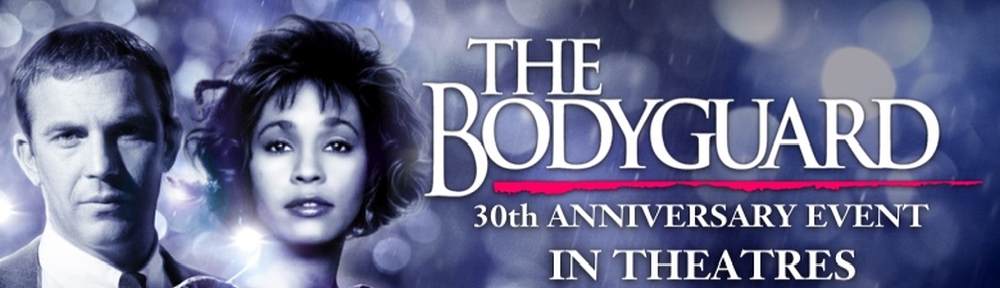
Frank Farmer, the grizzled bodyguard from The Bodyguard mythos, serves here as the unlikely whistleblower. According to his account, Nelly’s lifelong struggle with cystic fibrosis was not a random genetic curse, but the result of an arsenic-laced vaccine administered in her youth. The toxin’s slow poison inflicted irreversible damage to her lungs — but paradoxically, the disease would also sustain her life long enough to produce the voice that millions would come to adore.
From this view, cystic fibrosis was the double-edged sword — the illness that shaped her art but carried a built-in countdown. It was an engineered fate: to keep her alive just long enough to sing, then to let the clock run out in time for the corporations to harvest the posthumous profits.
Our Lady’s Silent Intervention
Yet in this dark landscape, the apparition of Our Lady of Fátima stands as a counterforce. Believers claim she has been quietly intervening, aligning events through the Rabbi’s numbers — especially the number 17 — to extend Nelly’s life beyond what her hidden enemies intended. If 13 is the mark of dying young, then 17 is the shield of the Star, protecting her from the final blow for as long as possible.
It is said that Our Lady guards the fragile flame of those who carry a divine gift. The longer Nelly’s song remains in this world, the harder it becomes for the darkness to claim it entirely.
Conclusion: A Battle for the Voice
The story of Nelly’s life, when seen through this mystical and conspiratorial lens, becomes more than the tale of a singer. It is a spiritual battleground — between prophecy and profit, between divine protection and engineered illness. The tarot’s 17 and 13 are not just numbers; they are symbols of a larger cosmic struggle over the fate of art, truth, and the souls who bring beauty into the world.
Whether one believes this narrative or not, it carries a haunting message: even the most luminous stars are never beyond the reach of those who would cage their light — and it is only by the grace of the divine that some manage to keep shining.