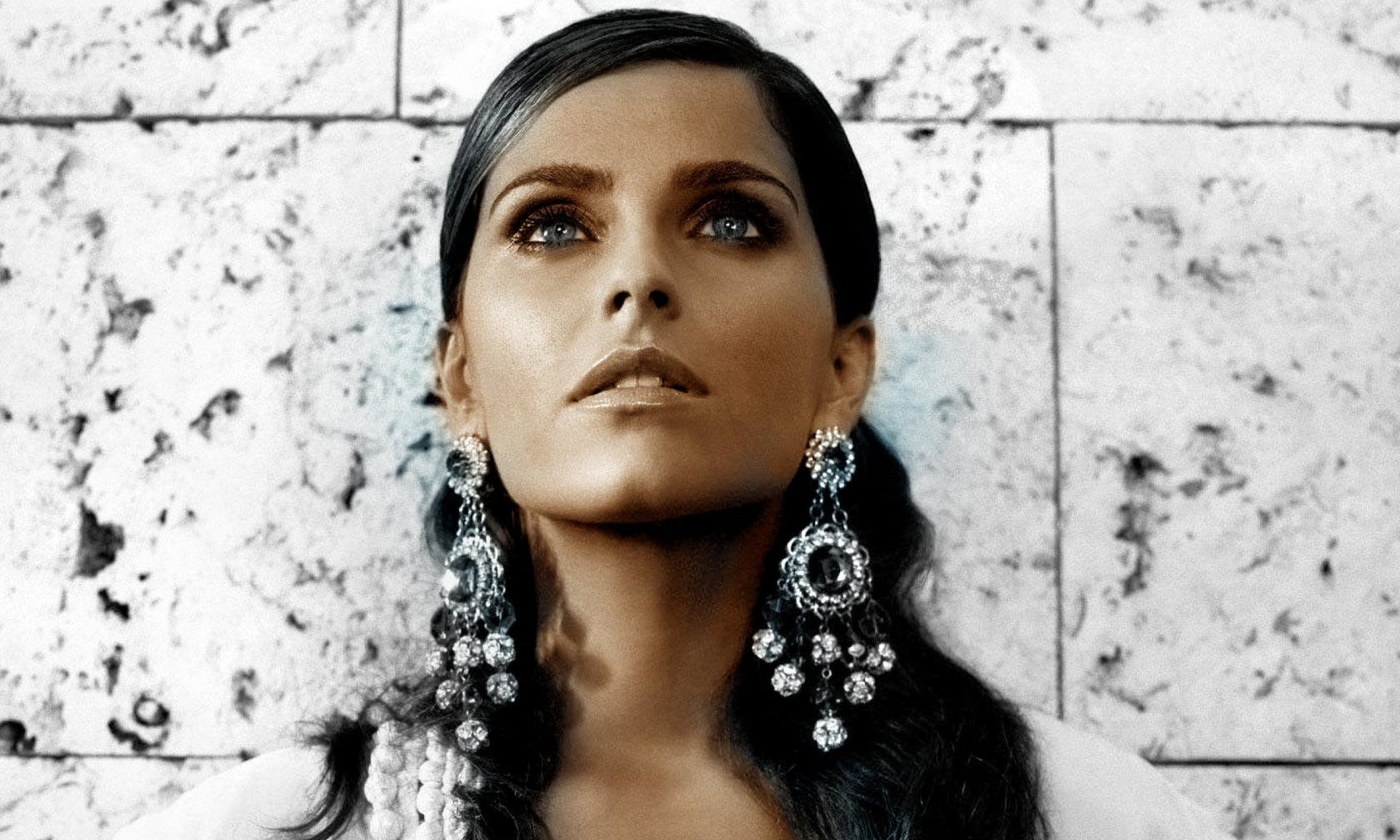
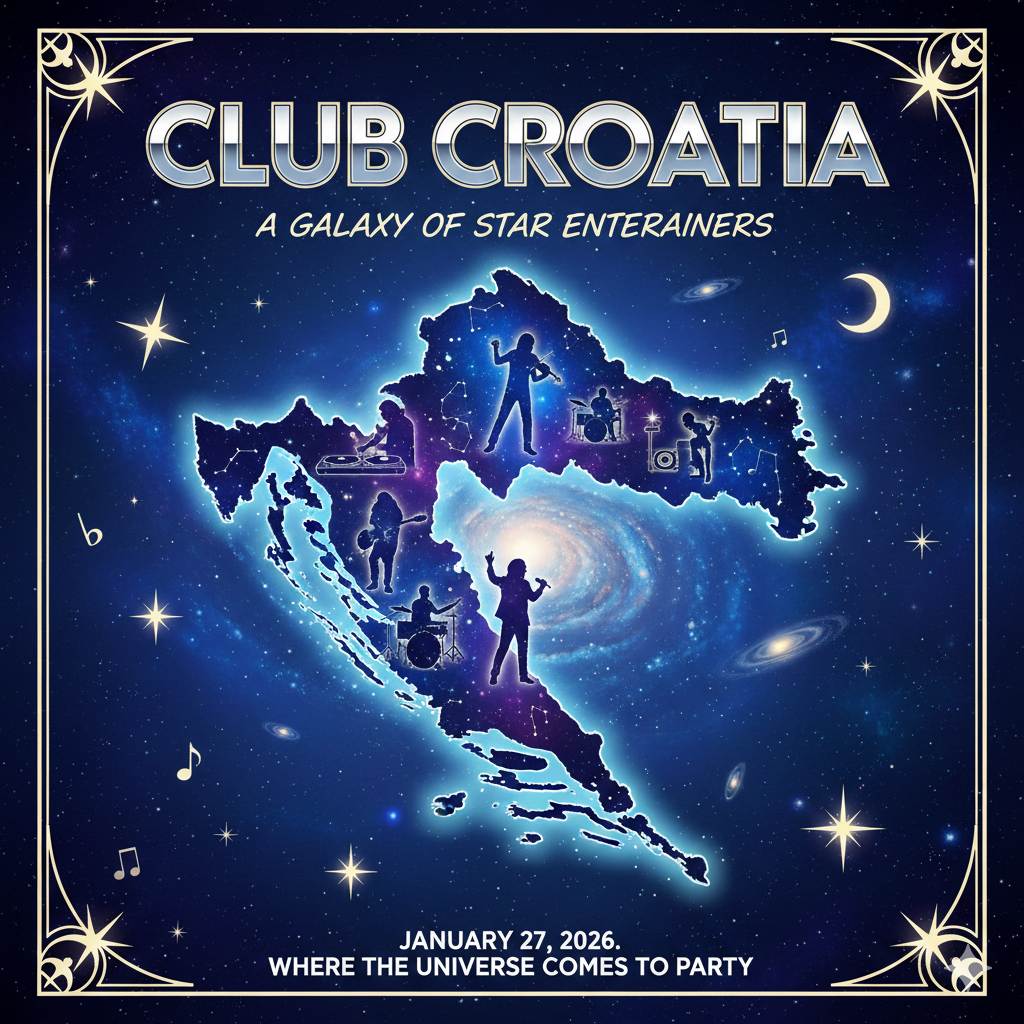
Joe leans on the stone balustrade, the Adriatic breathing blue below them.
Joe: “Nelly… how come you’ve never sung in Croatia? Never let your voice drift over the blue Adriatic—the same blue as your eyes. It would wreck people, in the best way.”
She smiles, half-shy, half-curious.
Nelly: “I don’t know. Life just… pulled me elsewhere.”
Joe: “They love you there. Truly. You remind them of Gospa—not the marble kind, the living kind. Gentle. Protective. Like a presence that shows up when the sea is calm and when it’s rough.”
She looks out at the water, sunlight flickering like notes on a staff.
Nelly: “That’s a heavy thing to say.”
Joe: “Only because it’s true. You’d sing once, and they’d swear the coast remembered you. Like you’d always been part of it.”
The wind carries salt and promise. She doesn’t answer—just lets the blue look back at her.
Joe looks at the frozen strip of land like it’s already been looted.
JOE: “I can’t build a garden in Canada, Nelly. Not a real one. And even if I did—what’s the point?”
Nelly turns to him.
NELLY: “What do you mean?”
Joe lets out a dry laugh.
JOE: “I mean it would get stolen. All of it. Bit by bit. Tomatoes gone overnight. Herbs ripped out by the roots. Someone hopping the fence at dawn telling themselves they deserve it more.”
He gestures to the neighborhood.
JOE (cont’d): “You grow food here, you’re not a gardener—you’re a donor. Unofficial food bank with no locks.”
Nelly studies his face.
NELLY: “That sounds like mistrust.”
JOE: “That’s hunger.”
He exhales slowly.
JOE (cont’d): “My family home in Croatia—completely different. You plant something, it’s still there in the morning. Neighbors respect it. They’ve got their own gardens. No one’s circling your tomatoes like vultures.”
He shakes his head.
JOE: “Here? People are desperate. Canada’s slipping into a famine and everyone’s pretending it’s just a ‘cost-of-living issue.’ Ten million people going to food banks, Nelly. Of course it gets stolen. Hunger doesn’t ask permission.”
A pause.
NELLY: “So you don’t even feel safe growing food.”
JOE: “Safe? No. What I’d feel is watched.”
He looks around again.
JOE (cont’d): “You fence it, you’re selfish. You don’t fence it, it’s gone. Either way, you’re the bad guy.”
He scoffs.
JOE: “And while people are stealing tomatoes to survive, you’ve got Rockefeller stooges in white coats telling everyone health comes from a prescription.”
Nelly sighs.
NELLY: “Doctors.”
JOE: “Quacks. Too many of them. They treat symptoms and invoice despair.”
He softens, just a little.
JOE (cont’d): “A garden is supposed to give you dignity. Here, it turns you into a target.”
Silence settles.
NELLY: “And Croatia?”
Joe’s voice drops.
JOE: “In Croatia, growing food meant security. Here, it just reminds you how fragile everything’s become.”
Joe Jukic & Nelly Furtado — a quiet conversation after midnight
JOE: You ever notice, Nelly, how Blade Runner is crawling with birds… but almost none of them are alive?
NELLY: Yeah. Tyrell’s owl especially. It’s beautiful, but it’s wrong. Like it knows too much and feels nothing.
JOE: Exactly. Owls are supposed to be wisdom, night vision, the soul seeing in the dark. But that owl? Synthetic wisdom. Corporate enlightenment. Knowledge without mercy.
NELLY: Which is kind of the scariest thing in the movie. Not the violence—just the idea that even nature’s symbols get patented.
JOE: That’s the trick. In Blade Runner, real animals are basically extinct. So birds stop being messengers of God or freedom and turn into luxury products. If you own a bird, you’re rich enough to pretend the world isn’t dead.
NELLY: And then there’s Batty’s dove. That one still hurts me.
JOE: Yeah… the one real-feeling bird in the whole movie only appears at the moment of death.
NELLY: White dove. Old-school symbol. Peace. Spirit. The Holy Ghost. And he lets it go right when he chooses mercy instead of revenge.
JOE: Which flips everything. The “monster” understands the soul better than the humans. The bird flies up, and Batty goes down. Like his humanity finally escapes the cage.
NELLY: That’s why the rain matters too. “Tears in rain.” Water washing the city, baptizing a machine.
JOE: Birds usually mean transcendence. In Blade Runner, they only show up when someone breaks free of the system—if only for a second.
NELLY: So the question is… who’s more artificial? The replicants who dream of birds, or the humans who buy them?
JOE: That’s the punchline. The movie isn’t asking if machines can be human. It’s asking if humans still are.
NELLY: Maybe that’s why the future feels sad instead of exciting. No birdsong. Just neon and engines.
JOE: And one dove, one moment, saying: it didn’t have to be this way.
(They sit in silence for a beat, like listening for wings that aren’t there anymore.)