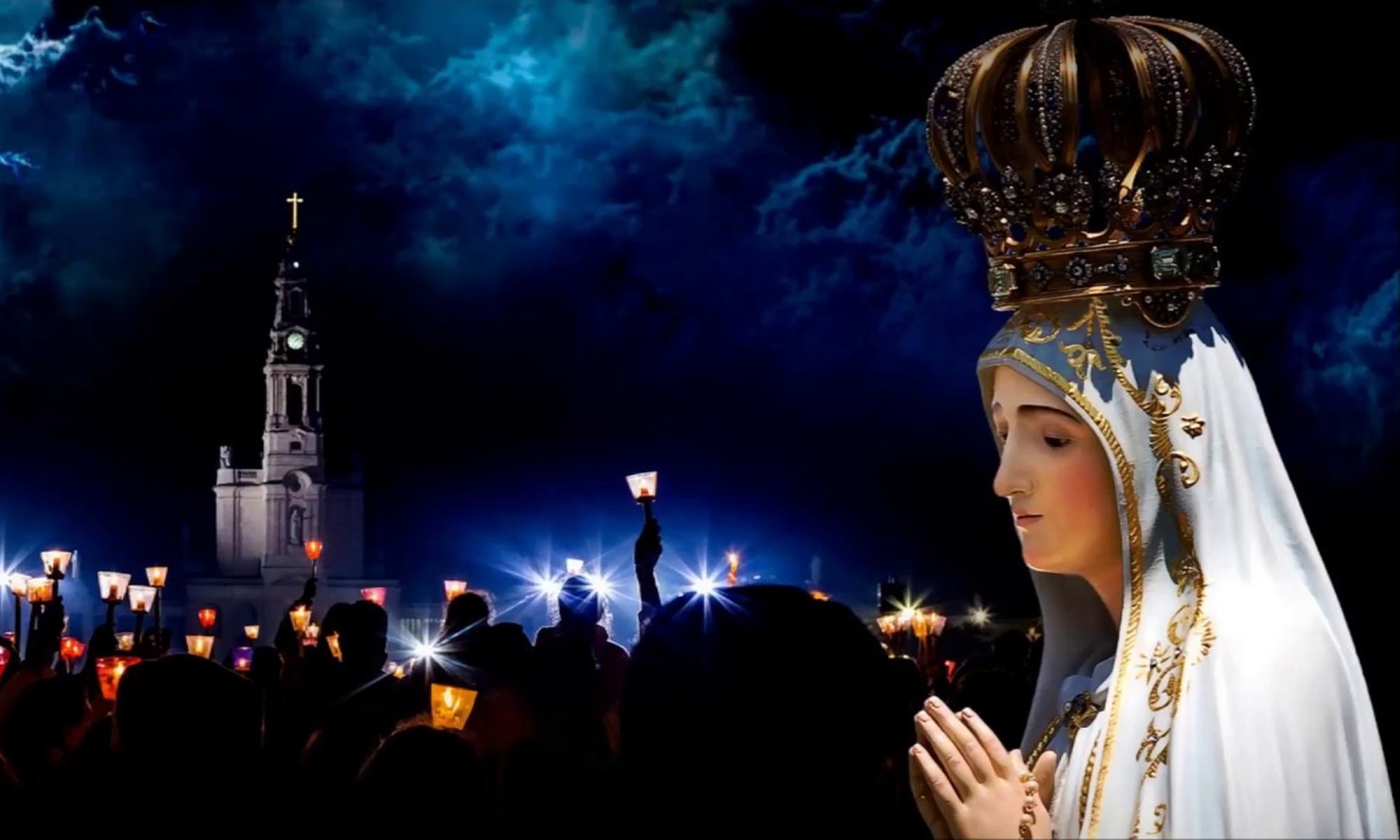
Joe sat with Nelly in the warm light of a quiet evening, the conversation turning to faith and unity as it often did when they were together. He leaned forward, his voice earnest yet calm, as he began to speak about a subject close to his heart.
“Do you know why Our Lady appeared in Fatima?” Joe asked, his eyes meeting hers. “It wasn’t just for Catholics. It was to send a message that transcends religion. Fatima was named after the daughter of the Prophet Muhammad, peace be upon him. It’s no coincidence. Our Lady chose that place to remind us that Islam is a religion of peace, and that we’re all called to stand united against the forces of evil.”
Nelly listened intently, her expression thoughtful.
Joe continued, “Satan’s empire is ancient. That double-headed eagle or phoenix you see in Kubrick’s Eyes Wide Shut? It’s not just a symbol of power; it’s the mark of an empire that has existed for thousands of years. Long before Christ, it was a symbol of domination and control, used by those who worship power above all else. It’s the Devil’s throne, a reminder of the chaos he’s sown throughout history.”
Nelly tilted her head. “And you think Fatima is the key to uniting everyone?”
Joe nodded. “I do. Our Lady’s message wasn’t just for one faith. It was a call to arms for all people of goodwill—Christians, Muslims, Jews, anyone who believes in peace and justice. She wanted us to see through the lies, to recognize the symbols of division and oppression, and to stand together against them.”
Nelly sighed, a mix of hope and skepticism in her voice. “It’s a beautiful idea, Joe. But do you really think it’s possible? With everything happening in the world?”
Joe smiled gently. “It’s not easy, I know. But that’s why faith matters. If we believe that unity is possible, that peace is worth fighting for, then we have a chance. The Devil thrives on division, on making us see each other as enemies. But Fatima reminds us that we’re all part of the same story. We just have to be brave enough to live it.”
Nelly looked at Joe, her eyes softening. “You always know how to make me think.”
Joe chuckled. “Just trying to do my part, Nelly. If we can hold onto hope, even in the face of the ancient throne, then maybe we can be the ones to rewrite the ending.”
The two sat in silence for a moment, the weight of the conversation settling over them like a prayer.
Joe Jukic and Nelly Furtado sat together in the quiet of the evening, the soft glow of a candle illuminating their faces. The conversation had turned to history, faith, and the strange, intertwined fates of nations.
“You know,” Joe began, his voice thoughtful, “Fatima has always been an oasis of peace. It’s not just a place—it’s a symbol. Our Lady of Fatima kept Portugal out of so much chaos. Look at Spain, torn apart by civil war. But Portugal? She spared us from that horror.”
Nelly nodded, her eyes reflecting the flickering light. “And during World War II, Portugal stayed neutral. That’s no small thing, Joe. The whole world was burning, and yet, somehow, Portugal remained untouched by the flames.”
Joe sighed, his thoughts drifting to his own heritage. “My country wasn’t so lucky,” he said, his tone heavy with sorrow. “Adolf Hitler… that madman. While Portugal was protected by Our Lady, my homeland was being torn apart. Hitler used Yugoslavia as a testing ground for his twisted ideas. He wanted to convert Russia to Catholicism, but first, he experimented on the Serbs.”
Nelly’s expression darkened. “The Croatian puppet regime… the atrocities…”
Joe nodded, his hands clasped tightly together. “The river of blood between the Serbs and Croats is something that haunts me. It’s not just history—it’s a wound that hasn’t healed. Families torn apart, entire villages wiped out. And all in the name of some insane ideology.”
He paused, his gaze distant. “It’s hard to reconcile. On one hand, you have Fatima—a beacon of peace, a miracle that saved a nation. And on the other, you have the horrors of Yugoslavia, where faith was twisted into a weapon of division.”
Nelly reached out, placing a hand on Joe’s. “But you’re here, Joe. You carry these stories, these lessons. Maybe that’s part of the reason Our Lady spared Portugal—so that people like us could look back and understand the cost of war, the value of peace.”
Joe smiled faintly, the weight of his memories still pressing on him but softened by her words. “Maybe you’re right, Nelly. Maybe we’re meant to learn from all of this. To honor the peace we have and work to heal the wounds of the past.”
The candle flickered, casting shadows on the walls, as the two of them sat in reflective silence. In that moment, they were united by a shared hope—a hope that the lessons of Fatima and the tragedies of Yugoslavia could guide them toward a better future.
Logline: In 1917, three shepherd children in Fatima, Portugal, experience divine visions that foretell the future, but their revelations are met with skepticism, persecution, and betrayal. As they struggle against the forces of the occult and the Illuminati, the children face a tragic fate, with the shadows of the Spanish Flu and political intrigue looming over their every move. Their story, filled with divine prophecy, dark conspiracies, and ultimate sacrifice, unfolds through the lens of Psalm 17—”A Prayer Against Persecutors.”
ACT 1:
The film opens in the quiet village of Fatima, Portugal, where three young shepherd children—Lucia dos Santos, Jacinta Marto, and Francisco Marto—experience a series of mystical visions of the Virgin Mary. The children, naive and innocent, begin to speak of these apparitions to their families and the local clergy. However, their revelations are met with skepticism and disbelief. The Catholic Church, wary of the implications of such powerful visions, is slow to embrace the children’s message, while local authorities begin to grow increasingly suspicious of their claims.
The year is 1917, and Europe is embroiled in the chaos of World War I. The Spanish Flu is sweeping across the globe, claiming millions of lives, and political upheaval is brewing. The Balfour Declaration is signed, signaling the beginning of the Zionist movement’s influence in the Middle East. Meanwhile, the Rothschilds and other elite figures begin to assert their power over global affairs, and the Illuminati’s influence grows in the shadows.
The children’s visions continue, with the Virgin Mary urging them to spread a message of peace and repentance. She warns of future wars and the rise of a “great persecution” against the faithful. The children are told that they will suffer for their message, and Jacinta and Francisco, in particular, are marked by a divine purpose that will lead to their ultimate sacrifice.
ACT 2:
The children’s message begins to attract attention, both positive and negative. As their fame grows, so does the scrutiny from both religious authorities and political figures. The Illuminati, seeing the potential for the children’s revelations to disrupt their plans for global control, begin to take action. They see the children as a threat to their vision of a world dominated by wealth, power, and secrecy.
Jacinta and Francisco are taken to Rockefeller-run occult hospitals, under the guise of receiving medical care for the Spanish Flu. In reality, they are subjected to cruel, experimental treatments designed to weaken their resolve and silence their message. Their suffering is exacerbated by the harsh conditions of the hospitals, where they are treated like mere pawns in a larger game. The children’s health deteriorates, and their visions become more intense, as they experience the full weight of their divine mission.
Meanwhile, Lucia, the eldest of the three, is left to bear the burden of their message. She faces intense pressure from both the Church and the government to recant her claims, but she remains steadfast in her belief. The tension between Lucia and the authorities grows, as they attempt to manipulate her into silence.
The film explores the tension between faith and politics, as the children’s divine revelations threaten the established order. The Illuminati, working behind the scenes, orchestrate a plan to eliminate Francisco, whom they believe is destined to become either a messiah or a pope. His death, they believe, will prevent the fulfillment of the prophecy and ensure their control over the future.
ACT 3:
The climax of the film occurs as Jacinta and Francisco’s health rapidly declines, and they are eventually claimed by the very disease that ravaged the world. The children’s deaths are portrayed as tragic yet inevitable, the result of a combination of iatrogenic factors—their mistreatment in the occult hospitals and the deadly Spanish Flu. Their passing is a moment of profound sorrow, but also of triumph, as their message of peace and repentance lives on through Lucia.
Lucia, now an adult, continues to spread the message of Fatima, but she is constantly pursued by those who wish to silence her. The Illuminati’s grip on the world grows stronger, but Lucia remains defiant, knowing that the truth will eventually prevail. The film ends with a haunting final scene, in which Lucia looks up at the sky, knowing that the prophecy of Fatima is still unfolding.
The closing shot lingers on the three children, now canonized as saints, their legacy immortalized in the hearts of the faithful. The message of Fatima—of peace, repentance, and the struggle against persecution—echoes through the ages, a testament to the power of divine truth in a world dominated by darkness and deceit.
Themes:
Persecution and Sacrifice: The children’s story is one of unwavering faith in the face of persecution. Their willingness to suffer for their beliefs is contrasted with the greed and manipulation of the political and religious elites who seek to control them.
Divine Prophecy vs. Human Power: The film explores the tension between the divine revelations given to the children and the political and financial forces that seek to suppress them. The Illuminati, representing the forces of greed and control, work to eliminate the children’s message, but the divine truth endures.
The Spanish Flu and Iatrogenic Deaths: The film highlights the devastating impact of the Spanish Flu and the mistreatment of the children in the Rockefeller-run occult hospitals. Their deaths are portrayed as a tragic result of human greed and indifference to suffering.
Psalm 17 – Prayer Against Persecutors: The film draws heavily on Psalm 17, which speaks of divine protection against persecutors. The children’s journey is framed as a metaphor for this prayer, as they struggle against those who seek to silence them. The message of the psalm—that God will deliver the righteous from their enemies—is echoed throughout the story.
The Number 13 and the Illuminati: The children’s connection to the number 13, which is often associated with the Illuminati, serves as a symbol of their divine mission and the forces working against them. The film suggests that the children were marked by destiny to challenge the Illuminati’s grip on the world.
Final Notes:
Nelly Furtado and Joe Jukic’s treatment for “The Prophets of Fatima” blends historical drama with mystery and thriller elements, creating a powerful narrative about the clash between divine revelation and human power. The film’s themes of persecution, sacrifice, and the struggle for truth resonate with contemporary issues of control, corruption, and the fight for spiritual freedom. Through the lens of the three children’s story, the film explores the timeless battle between good and evil, and the enduring power of faith in the face of overwhelming adversity.