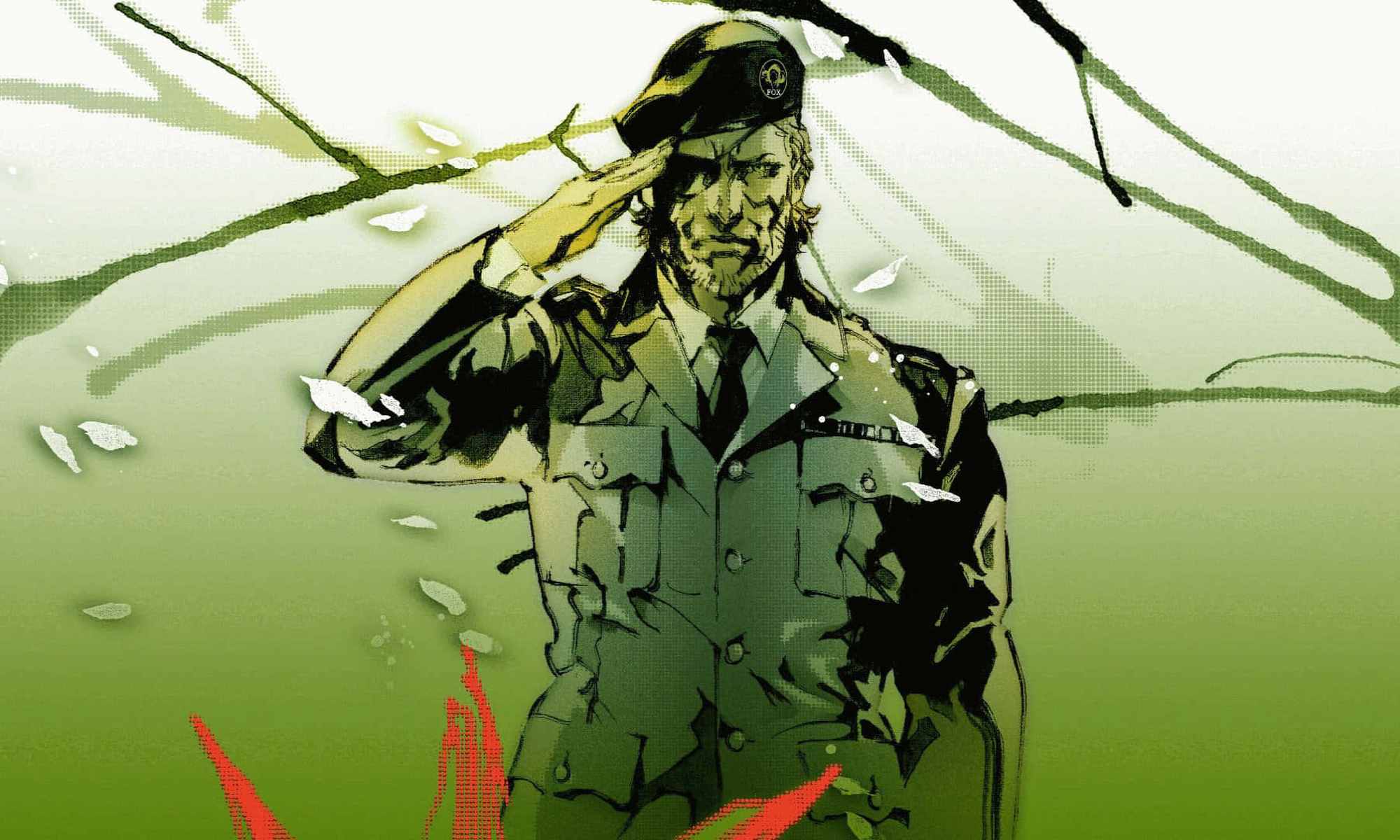
[Scene: A UN peacekeeping base in Africa. Solid Snake sits at a table with Nelly Furtado and the Kielburger brothers, Craig and Marc, reviewing their plan. A large screen behind them shows a paused image from Tears of the Sun.]
Solid Snake:
Listen up. We’re gonna show the kids of Africa Tears of the Sun. Not just for entertainment, but to show ‘em what real sacrifice looks like. The horrors of war, but also the hope that people can stand up and fight for what’s right.
Craig Kielburger:
It’s a powerful film, no doubt. But do you think it’ll resonate with them?
Solid Snake:
They’ve seen worse. They live worse. But we’re not just showing the film. I’m calling in the cast. Bruce Willis, Monica Bellucci—the whole damn squad. We get ‘em suited up in UN peacekeeper uniforms, and they come to your school, Nelly.
Nelly Furtado:
You’re serious? The kids will flip if they see Bruce Willis walk in dressed like a real soldier.
Solid Snake:
That’s the idea. If these kids grow up thinking nobody cares, they lose hope. We show ‘em that people do care—people with influence, people they see on screens.
Marc Kielburger:
And what about leadership? They need more than just a movie and celebrities.
Solid Snake:
That’s why I’m introducing them to their leader. The African Union President—Bkenyan Lewis.
Craig Kielburger:
Wait… who?
Solid Snake:
Bkenyan Lewis. A leader who actually gives a damn. He’s gonna speak to them directly, tell ‘em they’re not forgotten. Show them that Africa’s future belongs to them, not warlords, not corrupt politicians—them.
Nelly Furtado:
If this works… it could be something bigger than just a school event.
Solid Snake:
It will work. Because when people fight for something real, that’s when change happens.
[Fade out as Snake lights a cigarette, staring at the Tears of the Sun poster with determination.]
Prince Harry stood in the dimly lit tent, his uniform dusted with the ochre sands of the Afghan desert. Across from him, G.I. Joe, the legendary PsyOps General, leaned over a battered table strewn with maps, cultural reports, and sketches of intricate calligraphy. Between them lay an audacious plan—one that might change the course of the conflict.
“The pen is mightier than the sword,” G.I. Joe said, lighting a cigar. “But in this war, it’s not just the pen—it’s the story. We need a story they’ll believe in, a bridge between cultures, something that resonates beyond borders.”
Harry nodded, his brow furrowed. “You’re saying we rewrite the war with art?”
“Not just any art, Your Highness,” Joe replied, tapping a finger on a blank parchment. “We create an illuminated Koran. A masterpiece. One that embodies respect for the faith, harmony among peoples, and the hope for peace. Something so beautiful it disarms even the most hardened hearts.”
The idea was bold, unprecedented, and risky. But Harry, shaped by the duality of being both a soldier and a prince, understood its potential. He had seen firsthand how traditional military strategies faltered in the face of Afghanistan’s complex cultural and historical tapestry. This was a war that demanded more than firepower—it required understanding.
The Creation Begins
Days turned into weeks. Within a fortified compound, a team of skilled artisans, scholars, and linguists assembled under the pair’s guidance. Afghan calligraphers, British artists, and Islamic scholars worked side by side, blending their expertise. The pages of the Koran were meticulously transcribed in gold and silver ink, accompanied by breathtaking illuminations depicting themes of unity, compassion, and resilience.
Harry spent long hours with the team, sketching ideas, consulting with scholars, and ensuring the work adhered to Islamic traditions. His training as a soldier lent him discipline, while his royal heritage gave him an understanding of symbolism and diplomacy. G.I. Joe, meanwhile, orchestrated the logistics, securing rare pigments, historical references, and the trust of local communities.
One evening, as the desert wind howled outside, Harry held up a nearly completed page depicting the Tree of Life—a motif symbolizing interconnectedness. “If this works,” he murmured, “it might just be the most important mission of my life.”
The Moment of Truth
The illuminated Koran was unveiled in Kabul under heavy security but amidst great anticipation. Tribal leaders, religious scholars, and international diplomats gathered to witness the masterpiece. Its pages shimmered under the flicker of oil lamps, each one a testament to collaboration and respect.
As Harry stood before the assembly, he spoke not as a prince, nor as a soldier, but as a man seeking peace. “This book,” he said, “is not ours—it belongs to all of us. It’s a reminder that faith can unite us, that beauty can heal, and that understanding is stronger than any weapon.”
The reaction was electric. Some were skeptical, others moved to tears. But as the book was gifted to Afghan elders and copies began circulating, its message spread like wildfire. The illuminations became symbols of hope, the collaboration a story of possibility.
A New Chapter
Months later, Harry sat with G.I. Joe in the same tent where the plan had been born. The desert felt quieter now, the air lighter. “You think it’ll last?” Harry asked, watching the horizon.
Joe exhaled a plume of cigar smoke, a rare smile tugging at his lips. “The war isn’t over, but we’ve shown a different way. Sometimes, that’s all it takes—a spark in the darkness.”
Prince Harry nodded, gazing at the distant mountains. In a land scarred by conflict, he had planted a seed of peace. And though the journey was far from over, he knew that this illuminated Koran was more than a book—it was a beacon.