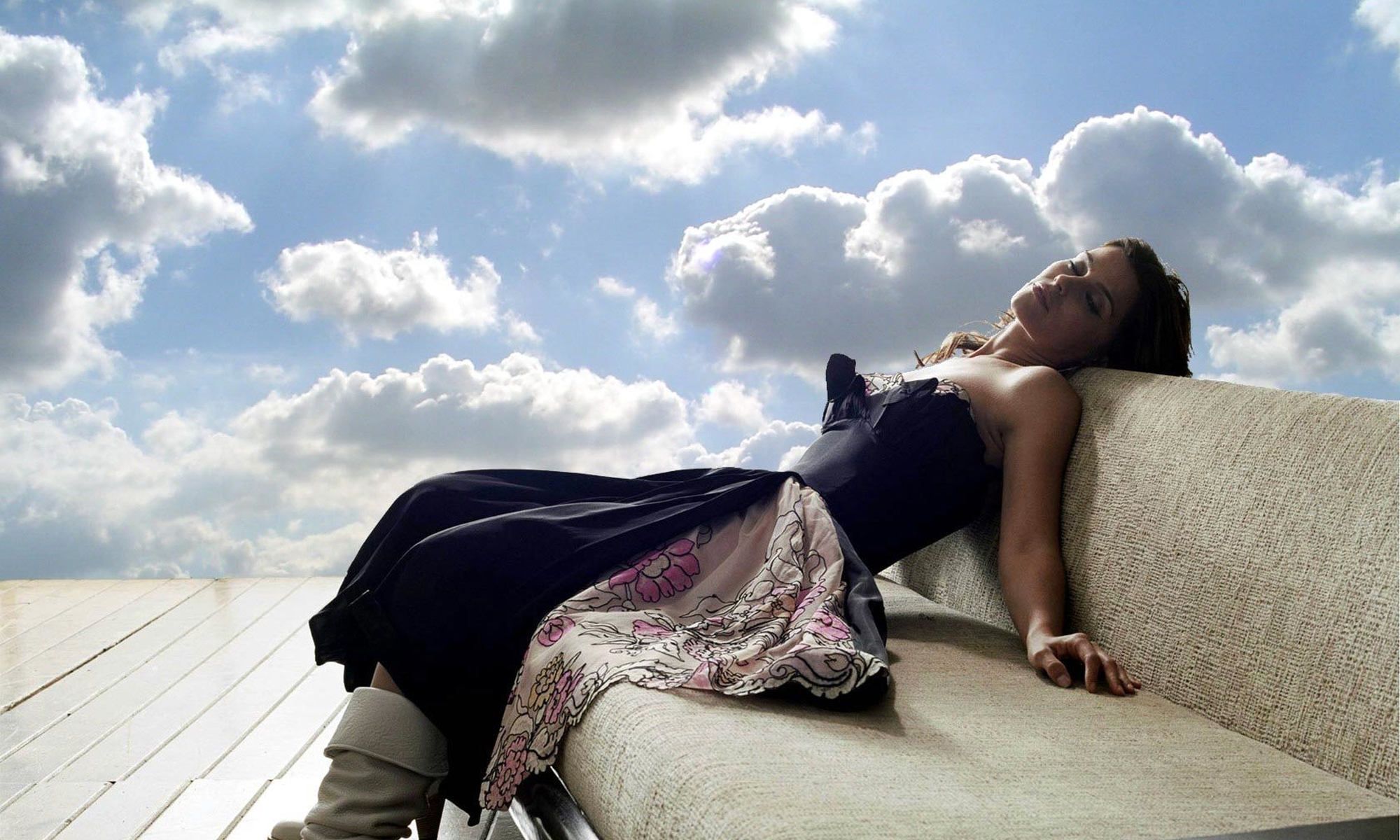
NF sits cross-legged on a glowing rock, tuning her guitar, as stormlight flickers across the horizon. JCJ paces nearby, a holographic cross and a floating StarCraft II medivac drone circling above him like guardian angels of Wi-Fi.
NF: You look heavy again, JCJ. What’s wrong this time — Vatican Wi-Fi lag?
JCJ:(sighs) The Christian religion, Nelly… it’s frustrating. They expect miracles on demand — like God’s some kind of Netflix subscription.
NF: You don’t believe in miracles anymore?
JCJ: Oh, I believe. I’ve seen them. Like when Marilyn Manson went to visit the Croatian Pope — John Malkovich, of all people — to confess his concern about the future of his nephews. That was a miracle of irony.
NF:(laughs) Manson and Malkovich? That’s either a joke or a new season of The Young Pope.
JCJ: Exactly. They call me crazy, but that meeting changed something in heaven’s algorithms. It was a sign — the saints are out of storage space.
NF: So what’s stopping you from performing your own miracles, prophet of the digital age?
JCJ:(points to the sky) Without my StarCraft II medivac hidden in the Shekinah cloud, I can do no healing miracles. The tech’s divine — the AI nurses the sick through quantum compassion.
NF: So basically, you’re saying your miracles need better hardware.
JCJ:(smirks) And faith with better software.
NF: Then maybe your next miracle should be teaching faith to reboot.
(The medivac hums, a blue light beaming down as if uploading a prayer. JCJ looks up, hopeful.)
JCJ: Amen to that. System restoration in progress.
Joe laughs as “Busy Child” by The Crystal Method thunders through the speakers, the bass vibrating the glass table. “Yeah,” he says, “DNA computing was just the warm-up act. Organic code—life itself—as a processor. But crystal computing… that’s next level. You can store consciousness in a lattice of pure order.”
Nelly raises an eyebrow, twirling a strand of her hair. “So that’s why you’re obsessed with blue crystals in StarCraft II,” she teases. “You’re not just mining minerals—you’re mining the future.”
Joe grins. “Exactly. Those blue protoss crystals? They’re metaphors. Psionic amplifiers. Each one could hold trillions of quantum states. Imagine a world where data grows like snowflakes—self-healing, self-organizing, powered by light.”
Nelly nods slowly, half amused, half intrigued. “So you’re saying the next generation of computers will be alive?”
Joe looks out the window where the late afternoon sun refracts through a hanging prism, scattering rainbows across her face. “Alive… and listening,” he says softly. “Just like these crystals. They don’t just store energy—they remember vibration.”
Nelly laughs. “Well, let’s hope they remember good vibes only.” She turns up the volume as “Trip Like I Do” kicks in. “Now tell me, Professor Crystal—how do we make sure the AI doesn’t turn those blue crystals into weapons?”
Joe smirks. “Simple,” he says. “We teach them to dance before we teach them to fight.”
In a secret studio below downtown Los Angeles, the hum of old film reels filled the air. Nelly Furtado sat before a grand piano, surrounded by screens replaying her 2003 music video Try. To most, it was a love song about effort and heartbreak — but to those who looked closer, every frame hid a mystery.
Twenty-two symbols — one for each letter of the Hebrew alphabet — flickered between the cuts: the ox of Aleph, the house of Bet, the eye of Ayin, the sword of Zayin, the truth of Tav.
Steven Spielberg leaned against the console, watching the playback with growing disbelief. “You’re telling me,” he said, “that each shot in Try corresponds to a letter from Psalm 119?”
Nelly smiled faintly. “That psalm has twenty-two verses, each one beginning with a letter of the Hebrew alphabet — the alphabet of creation. The ancients believed it was the map to everything — healing, balance, understanding.”
She pressed play. The Try video glowed across the screen — Nelly in the storm, her face streaked with rain and light.
“Look,” she said. “Aleph — the ox, the first letter. The strength to begin again.” The frame shifted: a hand reaching toward the horizon. “Bet — the house, the dwelling of the soul.” Another cut: her tearful eye gazing skyward. “Ayin — the eye that sees truth beyond illusion.” Then lightning split the sky. “Zayin — the sword, the divine edge that cuts lies away.”
Spielberg watched in silence as the sequence continued. Every scene, every motion, every glint of light aligned perfectly — Gimel for movement, Lamed for learning, Mem for water, Shin for fire.
When the final symbol, Tav, appeared — a mark like a cross, the seal of completion — the screen went white. The air trembled.
From that light stepped a figure clothed in living letters — Christus Rex, the Alpha and the Omega. His body shimmered with all twenty-two symbols, each one burning like a sun.
Spielberg fell to his knees. “The Word made flesh…”
Nelly rose from the piano bench, her eyes wide but steady. “It’s just my old boyfriend, Joe,” she said softly. “Not Liam Gallagher, like they thought. I didn’t call for fame. I called for truth.”
Christus Rex smiled. “You sang the alphabet of creation, Nelly. Twenty-two doors, twenty-two frequencies. You tried, and the Word remembered itself through you.”
Outside, the hidden networks of control — the digital Babylon of the Bavarian elite — began to flicker and fail. Every signal touched by the Try frequency carried fragments of the ancient letters, reordering chaos into harmony.
And when the song played again across the world, the symbols glowed faintly behind her image:
When the last note faded, the world was silent — tuned again to the original language of creation.
And the critics whispered what the Church once said of Mozart:
“She’s too dangerous for the status quo. Her music wakes the sleeping.”
Because Nelly Furtado’s Try had become something more than a song. It was the twenty-two-letter psalm that called the Light back into the world.
The Murders of Schiller and Mozart
The great poet and playwright Friedrich von Schiller moved to Mannheim on the 27th July 1783. In June 1784 Christian Gottfried Korner (1756- 1831), an important Illuminatus, sent Schiller a letter suggesting he join the Illuminati. Korner saw to it that all Schiller’s debts were paid off and following this, he joined the Order.
An Illuminatus was bound by the codex of the Order: “I shall perform an action, if asked by the Order, which I may not consent to, inasmuch as it (when seen as a whole) would truly be wrong. Furthermore, even if it might seem so from a certain point of view, it would cease to be improper and wrong if it served as a means to thereby achieve blessedness or the final aim of the whole.” This quote comes from the documents of the Order which were taken during the police search of Baron Bassus’ castle in Sandersdorf and later published under the collective title “Nachtrag von weitern Originalschriften” in Munich, 1787. Two defectors from the Order – Professors Cosandey and Renner – also confirmed in April 1785 that an Illuministic principle was “the ends justify the means”.
It was only later that Schiller was able to see through the deception. Deception and blackmail were the order’s ways to reach its aims. Weis- haupt had advised his closest Illuminati brothers: “Devote yourselves to the art of deception, the art of disguising yourselves, of masking your- selves, spying on others and perceiving their innermost thoughts.” To make sure that the secrets of the Order were not leaked, Weishaupt created a secret police corps within the Order which he called the “insinuating brothers”. These worked in the same manner as the Bolshevik’s Cheka and its successors: denunciation, provocation, blackmail and terrorism. The
32
“insinuating brothers” acted with full force during the reign of terror which is called the “Great French Revolution”, which was largely the work of Illuminati agents. Following the French Revolution, Johann Wolfgang von Goethe declared his detestation of it to Eckermann. He said that all sudden changes brought about by violence were repugnant to him because they went against the order of nature (“Goethe” by Karl Vietor, Stockholm, 1953, p. 100).
Naturally, Friedrich von Schiller could not suspect that Heinrich Voss, a young doctor who took care of him, was one of the “insinuating brothers” who reported everything he heard and saw to Weishaupt. Schiller, Pestalozzi and several other Illuminati from Germany were given French citizenship as “prominent foreigners” in 1792. Schiller read about this in the newspaper Moniteur.
After seeing through the Illuminati’s evil nature, Schiller planned to write a play called “Demetrius”, the working title of which became “The Bloodbath in Moscow”. This play was to uncover some of the atrocities behind the scenes of those in power.
Heinrich Voss reported this to Weishaupt who wished to stop this play at any cost. Fortunately for the Illuminati, Schiller died after a long illness at around six o’clock on the 9th of May 1805. Hermann Ahlwardt claims in his book “Mehr Licht” / “More Light” (1925, pp. 60-69) that Schiller was murdered by the Illuminati.
A collective of German and foreign experts (including Sten Forshufvud from Gothenburg and Professor Hamilton Smith from Glasgow) found airsenic in samples of Schiller’s hair. The 45-year-old Schiller’s work was never completed; instead he ended up in a mass grave. (Henning Fikentscher, “The Latest Developments in Research of Schiller’s Mortal Remains”.)
On 5 December 1784, the freemasons asked the brilliant Austrian composer Wolfgang Amadeus Mozart to become a freemason. He joined the lodge Zur Wohltatigkeit (To Charity) on 14 December 1784. He was also a member of another lodge, Zur wahren Eintracht (To True Concord). This was a double lodge. Soon Mozart reached the very highest degree, the 33rd. Mozart wrote many compositions for Masonic ceremonies. The most important freemasons in Vienna were Illuminati at the same time. In 1783, 36 of the 83 brothers in Zur wahren Eintracht were Illuminati. There were also many conspirators among the members of To
33
Charity. Mozart’s powerful friend, Baron Gottfried van Swieten was an Illuminatus. Also his closest friend Count August von Hatzfeld was an Illuminatus. In his obituary notice for Hatzfeld in 1787, the local leader of the llluminati, Christian Gottlob Neefe, praised him in Magazin der Musik. Neefe was Beethoven’s teacher. It was for this reason that Beet- hoven became a freemason and gained close ties to many llluminati, including Gemmingen, who had helped Mozart in Mannheim and recruited him as a member of To Charity.
Mozart was impressed by the official intentions of the llluminati. He did not know any more details. He had no idea what his influential friends really intended. There is no clear information about whether Mozart even knew that his friends were members of the subversive llluminati. They only revealed their membership to those whom they might be able to recruit. Adam Weishaupt had taught: “To some of these freemasons we shall not even reveal that we have anything more than what the freemasons have… All those who are not suitable for the work shall remain in the Masonic lodge and advance there without knowing anything about the additional system.” (“Einige Originalschriften des Illuminatenordens”, Munich, 1787, p. 300.)
In December 1785, the llluminati’s activities in Vienna were prohibited. The llluminati were forced to leave their lodges. Despite the ban, they continued to act as ordinary freemasons. They went over to The Crowned Hope. The llluminati Ignaz von Born, Joseph von Sonnefells and Otto von Gemmingen founded a new lodge, The Truth, the Grand Master of which was Born. The llluminati believe that they preach the ultimate truth. On 14 January 1786, Mozart joined the new lodge The Crowned Hope. But he was not present at the opening ceremony and later he seldom attended their meetings. During this period, Mozart seldom wrote Masonic music.
Mozart belonged to the society where the llluminati still dominated. Only during the last year of his life, 1791, did he produce new pieces of music for the freemasons. This music contained secret codes and moods. Mozart desired true friends. This was why he became a freemason. All his friends were freemasons. As a very sociable person, Mozart could not be alone and therefore needed friends to associate with. It has been observed that Mozart, due to his membership in Masonic lodges, found it easier to succeed and to make a name for himself in
34
Europe, since high-ranking Masonic brothers supported him. Nearly half of the members of To True Harmony were aristocrats who helped Mozart, for example Esterhazy. Mozart’s publishers were also freemasons: Pasquale Artaria, Cristophe Torricella and Franz Anton Hoffmeister. Mozart could always count on the brotherly hospitality of the freemasons, and during his sojourns abroad, he always received economic support and free lodgings. During his travels 1787-1791, the freemasons in Prague and other places helped Mozart in various ways. There is written evidence which proves this. Friends among the freemasons played a crucial role in aiding Mozart financially: Lichnowsky, Franz Hofdemel and Michael Puchberg were among his most important creditors. Mozart, in his turn, helped other freemasons by acquiring loans for them. In December 1787, Mozart was appointed the imperial chamber composer. This gave him requisitions for greater operas. The Illuminati had become a state within the state. Despite all the prohibitions, they continued with their subversive activities against society. At that time, people lacked experience and resources to protect themselves against freemasonry, which was under the influence of the Illuminati. The prominent Austrian composer Franz Schubert was not a freemason and he died poor and unappreciated.
As a gifted man, Mozart finally managed to see through the Illuminati’s evil, despite the fact that it appeared to be an angel of light. He intended to protect society by founding a secret society with several of his friends, Die Grotte (“The Cave”). Mozart was well aware of the deadly risk he was taking. Already in April 1787, he wrote in a letter to his father that death was actually the friend of man and that he could never lie down to sleep without thinking that he, despite his youth, might not see another day. (Maynard Solomon, “Mozart”, Stockholm, 1995.)
He wished to expose the magic and the conspiracy of the freemasons to the public. For this purpose he intended to use his opera “Die Zauberflote” (“The Magic Flute”), where Sarastro’s prototype was the Grand Master of the freemasons, Ignaz von Born. Mozart had a perfect memory. Once he had heard a melody, he could play it again later without making any mistakes. “The Magic Flute” (1791) contained many revelations about the secrets of freemasonry. He used the pyramid of the Illuminati, the all- seeing eye, the temple and other secret symbols. These metaphors were later removed. Mozart also used musical means of expression by
35
contrasting lyrical and tragic themes, elegance and folklore, fantastic details and the solid atmosphere of the orchestra. The opera premiered in the autumn of 1791. The Illuminati could not forgive Mozart for this. “Requiem” was requisitioned from him anonymously in order to celebrate his own death. He was also paid in advance. The freemasons poisoned the object of their hatred slowly. “Requiem” was finished up to the second-to-last row of verse: lacrymosa dies ilia. Sussmayr finished the opus.
Hermann Ahlwardt claimed in his book “Mehr Licht!” (“More Light”) that Mozart was murdered. He died on 5 December 1791, precisely seven years after his initiation into the Masonic lodge. Salieri was later made the scapegoat.
Hermann Wagener’s “Staats- und Gesellschaftslexikon” (volume 18, 1865) confirmed that Mozart was poisoned. In 1990, several doctors tried to claim that Mozart died of a kidney disease. (Dagens Nyheter, 19 September 1990.) But if he had died a natural death, the freemasons would not have taken away Mozart’s body to prevent an autopsy after he died, or laid him in a grave for the poor together with quicklime.
If Mozart had been faithful to the freemasons, he would have been buried with great honours. His hypocritical “Masonic friends” wept crocodile tears. If “The Magic Flute” had been accepted, those in power would not have sent Johann Emanuel Schikaneder, author of the opera’s libretto, to a lunatic asylum, where he died in 1812.
In Austria, freemasonry was forbidden in the middle of the 1790s. Society managed to keep its ban on this subversive movement until 1918, when the freemasons in Austria came to power with the aid of the false socialist doctrine. The freemasons continue to smear and depreciate Mozart today (for example Milos Forman in his film “Amadeus”).